
Hear from Our Customers
Here’s what actually matters: your energy bills drop. During Palo Alto summers when temps hit the mid-80s, your new system runs efficiently instead of burning through electricity like the old one did. You’re looking at 30-50% less on those peak-season bills if your current unit is over 10-15 years old.
Your home stays comfortable without the hot spots or constant thermostat adjustments. Modern AC unit installation in Palo Alto means even temperatures in every room, better air filtration for wildfire season, and a system sized correctly for your square footage.
You also get clarity on what you’re paying for and why. We show you the equipment options, explain the efficiency ratings that actually affect your costs, and walk through rebates that can cover over 50% of your installation. No jargon, no upselling—just the information you need to make a smart decision for your home.
All Fresh Temp is a family-owned HVAC company that’s been handling air conditioner installation in Palo Alto since 2016. We’re local, which means we understand what Mediterranean climate patterns do to cooling systems and why proper sizing matters in homes with Palo Alto’s tree-lined neighborhoods.
We’re not the cheapest option—and that’s intentional. You’re paying for an HVAC installer in Palo Alto who shows up when promised, installs to code, and explains what’s happening at every step. We use quality parts, proper load calculations, and we don’t disappear after the install.
When your AC needs attention, we’re often available same day. That matters during heat waves when everyone else is booked out for weeks.
First, we assess your home. That means measuring square footage, checking existing ductwork, looking at insulation, and calculating the actual cooling load your space needs. This takes about an hour and determines whether you need a 2-ton or 4-ton system—guessing wrong here costs you hundreds annually in wasted energy.
Next, we walk through equipment options. Central air, ductless mini splits, or heat pump systems depending on your setup and goals. We explain efficiency ratings in plain terms: a 16 SEER vs 18 SEER unit and what that difference means for your monthly bills over the system’s lifespan.
Installation day typically takes four to eight hours if your ductwork is already in place. If we’re adding ductwork or doing a mini split air conditioner installation in Palo Alto, add another one to two days. We handle permits, coordinate inspections, and make sure everything meets local building codes.
After installation, we test the system, show you how to operate it, and explain what maintenance actually matters. You get documentation for warranty purposes and our number for any questions that come up.
Ready to get started?
Your air conditioner installation in Palo Alto includes proper load calculations—not guesswork based on your old unit’s size. We’re measuring your actual cooling needs because oversized systems cycle on and off constantly, driving up bills and wearing out faster. Undersized systems run nonstop and never quite cool your home.
You get equipment that makes sense for Palo Alto’s climate. That means efficient cooling for dry summers reaching the low-to-mid 80s, and if you’re replacing an AC unit with a heat pump system, you’re covered for those mild winters too. We also factor in air quality concerns—robust filtration matters here when wildfire smoke rolls through.
We handle the rebate paperwork. California offers substantial incentives for heat pump installation in Palo Alto: $1,500 for heat pump HVAC systems replacing gas, another $1,000 for income-qualified households, plus federal tax credits. These programs are confusing to navigate, so we walk you through what you qualify for and what documentation you need.
Installation includes permit acquisition, code compliance, and final inspection coordination. We also remove and dispose of your old system properly—you’re not dealing with refrigerant disposal regulations or hauling a 200-pound condenser unit yourself.
Expect to pay between $3,200 and $11,600 for AC unit installation in Palo Alto, depending on system type and your home’s specifics. A basic central air replacement with existing ductwork sits on the lower end. A full heat pump system with new ductwork or a multi-zone mini split air conditioner installation in Palo Alto hits the higher range.
Here’s what drives that cost: equipment efficiency ratings, your home’s square footage, ductwork condition, and whether you need electrical panel upgrades. A 16 SEER system costs less upfront than an 18 SEER, but the more efficient unit saves you $200-400 annually on energy bills in Palo Alto’s climate.
Factor in available rebates before you panic at the sticker price. Between federal tax credits, state rebates, and utility incentives, you could cover 50% or more of your installation cost. We help you identify what you qualify for and handle the paperwork so you actually receive those funds.
A straightforward central air replacement takes four to eight hours when your ductwork is already in place and in good condition. We’re talking same-day installation—you wake up with a broken AC, we’re done by dinner.
Adding new ductwork extends the timeline to one or two additional days. Ductwork installation means cutting access points, running ducts through your attic or crawlspace, sealing everything properly, and testing airflow. It’s not fast, but it’s necessary if your current ducts are undersized, leaking, or nonexistent.
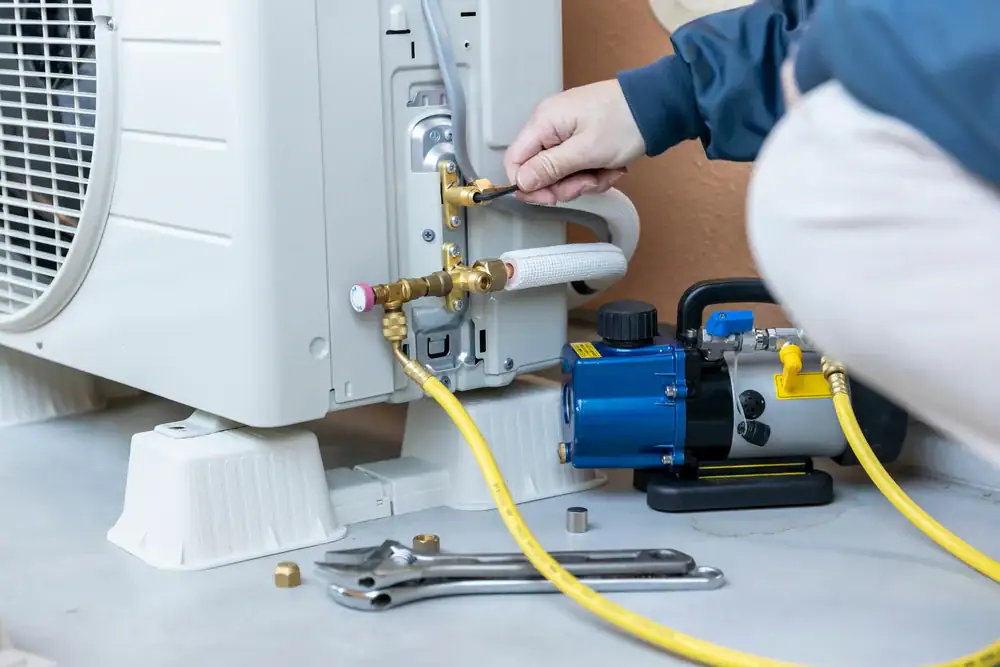
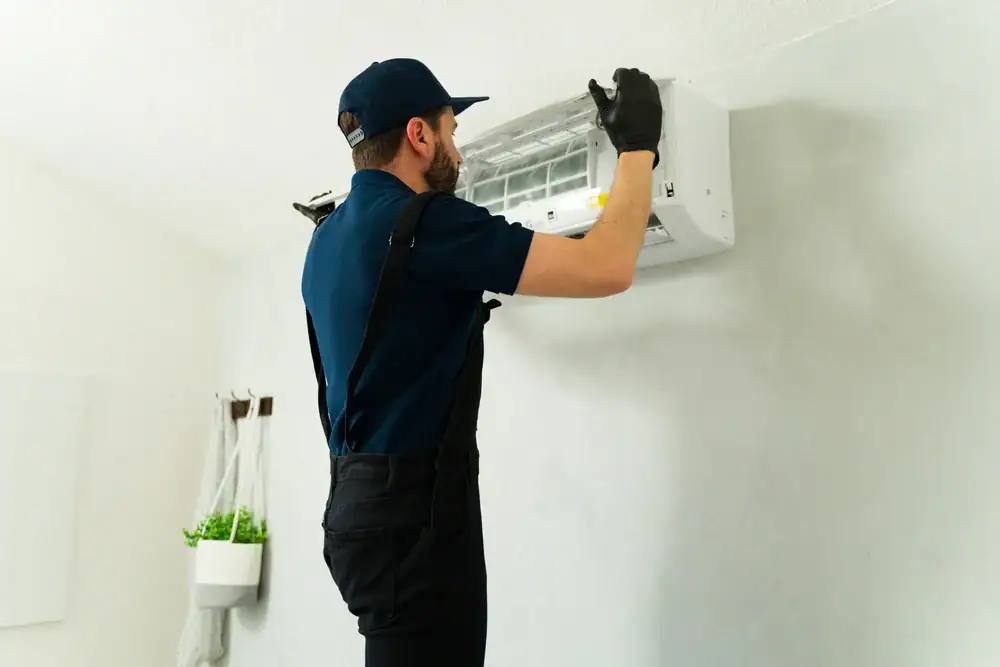
Mini split air conditioner installation in Palo Alto typically takes one to two days depending on how many zones you’re adding. Each indoor unit needs mounting, refrigerant lines run through your walls, and connection to the outdoor condenser. More zones mean more time, but you avoid the ductwork mess entirely.
Probably, especially if your furnace is also aging out. Heat pumps handle both cooling and heating, which makes sense in Palo Alto’s Mediterranean climate where you need both but neither is extreme. You’re replacing two systems with one, and heat pumps can condition your space for about a quarter of the cost of conventional heating and cooling.
Palo Alto is actively pushing for heat pump adoption as part of the city’s goal to transition from natural gas to carbon-free electricity by 2045. That means more rebates, more contractor experience with installations, and better long-term support for the technology.
The upfront cost for heat pump installation in Palo Alto runs higher than a straight AC replacement—usually $8,000 to $15,000 after rebates. But you’re eliminating gas heating costs, qualifying for substantial incentives, and installing equipment that meets where building codes are headed anyway. If you’re replacing an AC unit that’s 10-plus years old and your furnace isn’t far behind, the math favors heat pumps.
Your home needs whatever size a proper load calculation says it needs—not the same tonnage as your old unit. We see this constantly: someone’s replacing a 3-ton AC with another 3-ton because that’s what was there before. But that original system might have been incorrectly sized from day one.
Load calculations factor in your home’s square footage, insulation levels, window sizes and orientations, ceiling heights, and how many people typically occupy the space. In Palo Alto, we also consider your microclimate—homes closer to the bay stay cooler than properties further inland near the foothills.
Most Palo Alto homes need between 2 and 4 tons of cooling capacity. A 1,500-square-foot home typically needs a 2 to 2.5-ton unit. A 2,500-square-foot home usually requires 3 to 4 tons. But those are rough estimates—actual calculations take 30-45 minutes and prevent you from wasting money on an oversized system that cycles constantly or an undersized one that never quite cools your home.
Yes, and we handle that. Palo Alto requires permits for HVAC system replacements and new installations. The permit process ensures your installation meets electrical codes, refrigerant handling regulations, and energy efficiency standards.
Skipping permits is tempting—it’s faster and some contractors offer to do it—but it creates problems when you sell your home. Unpermitted work shows up during inspections, and you’ll either need to bring everything up to code retroactively or negotiate a lower sale price. It also voids equipment warranties and leaves you without recourse if something goes wrong.
The permit process adds a few days to your timeline but costs you nothing extra when we’re handling your air conditioner installation in Palo Alto. We pull the permit, schedule the required inspections, and make sure everything passes the first time. You get documentation proving the work was done legally, which protects your home’s value and keeps your equipment warranty intact.
Central air uses ductwork to distribute cool air throughout your home from a single indoor unit. Mini splits use individual air handlers in each room or zone, connected to an outdoor condenser by refrigerant lines—no ducts required.
Central air makes sense if you already have ductwork in good condition. It’s typically less expensive to install, maintains a consistent look throughout your home, and works well for whole-house cooling. The downside: you’re cooling rooms you’re not using, and ductwork leaks waste 20-30% of your cooled air in many homes.
Mini split air conditioner installation in Palo Alto works better if you don’t have existing ductwork, if your ducts are in rough shape, or if you want zone control. You can cool your bedroom to 68 degrees while keeping the living room at 74. Each zone operates independently, which cuts energy waste significantly. The tradeoff: higher upfront costs and visible indoor units on your walls instead of hidden vents.
Other Services we provide in Palo Alto