
Your AC doesn't pick convenient hours to break down. Discover why Santa Clara homeowners need 24/7 emergency AC repair—and what to do when cooling fails at the worst possible time.
Share:

Summary:
Not every AC hiccup requires an emergency call. A system that’s running but just not keeping up during a 95-degree afternoon might need a tune-up, but it’s not a crisis. An emergency is different. It’s when something stops working entirely, when safety is at risk, or when waiting could cause serious harm to your family or your equipment.
In Santa Clara, where summer temps regularly hit the low 80s and homes rely on AC for months at a time, certain situations demand immediate attention. If your AC shuts down completely and won’t restart, that’s an emergency. If you smell burning plastic or electrical odors coming from your unit or breaker panel, that’s an emergency. If your system is tripping breakers repeatedly, leaking refrigerant, or blowing warm air when it should be cooling, those are all signs you need help right away.
The key is recognizing when a problem has crossed the line from “annoying” to “urgent.” Homes with elderly family members, young kids, or pets are especially vulnerable when cooling fails. What might be uncomfortable for a healthy adult can quickly become dangerous for someone who can’t regulate their body temperature as effectively.
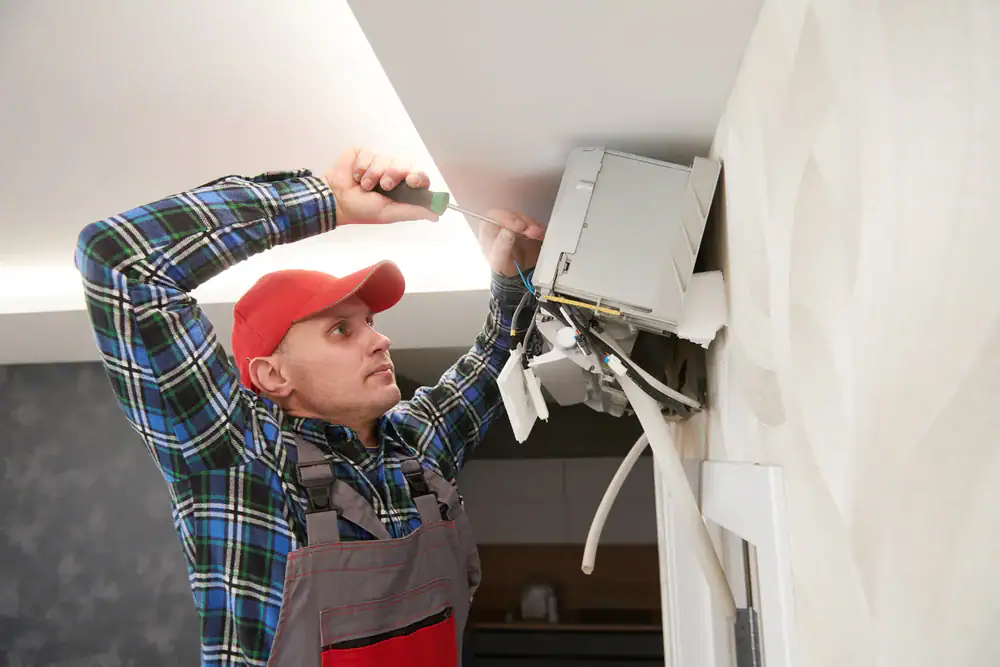
There’s something uniquely frustrating about an AC that works fine all day but refuses to cool your home once the sun goes down. You’re exhausted. You want to sleep. But instead, you’re lying there in a pool of sweat, flipping the thermostat down over and over, hoping something changes. It doesn’t.
This is more common than you’d think, and it’s not just in your head. Some AC systems struggle at night due to thermostat issues, low refrigerant, or problems with the compressor that only show up when outdoor temperatures drop and the system tries to cycle differently. Other times, it’s an airflow issue that becomes more noticeable when the house is closed up and everyone’s home.
Whatever the cause, losing sleep night after night isn’t just frustrating—it affects your health, your mood, and your ability to function the next day. And if you have kids who can’t sleep, elderly parents who are overheating, or pets panting in the heat, the situation becomes even more urgent. Nighttime AC failures are one of the top reasons people search for emergency repair services. You shouldn’t have to wait until morning to get relief, and you definitely shouldn’t have to suffer through multiple nights hoping the problem resolves itself.
When your AC won’t cool at night, it’s often a sign of an underlying issue that’s only going to get worse. A refrigerant leak doesn’t fix itself. A failing compressor doesn’t suddenly start working again. The sooner you get a technician out to diagnose the real problem, the sooner you can get back to sleeping comfortably. That’s where 24/7 service makes all the difference.
There’s something uniquely frustrating about an AC that works fine all day but refuses to cool your home once the sun goes down. You’re exhausted. You want to sleep. But instead, you’re lying there in a pool of sweat, flipping the thermostat down over and over, hoping something changes. It doesn’t.
This is more common than you’d think, and it’s not just in your head. Some AC systems struggle at night due to thermostat issues, low refrigerant, or problems with the compressor that only show up when outdoor temperatures drop and the system tries to cycle differently. Other times, it’s an airflow issue that becomes more noticeable when the house is closed up and everyone’s home.
Whatever the cause, losing sleep night after night isn’t just frustrating—it affects your health, your mood, and your ability to function the next day. And if you have kids who can’t sleep, elderly parents who are overheating, or pets panting in the heat, the situation becomes even more urgent. Nighttime AC failures are one of the top reasons people search for emergency repair services. You shouldn’t have to wait until morning to get relief, and you definitely shouldn’t have to suffer through multiple nights hoping the problem resolves itself.
When your AC won’t cool at night, it’s often a sign of an underlying issue that’s only going to get worse. A refrigerant leak doesn’t fix itself. A failing compressor doesn’t suddenly start working again. The sooner you get a technician out to diagnose the real problem, the sooner you can get back to sleeping comfortably. That’s where 24/7 service makes all the difference.
Want live answers?
Connect with a All Fresh Temp expert for fast, friendly support.
Refrigerant is what makes your AC actually cool the air. It’s a chemical that cycles through your system, absorbing heat from inside your home and releasing it outside. Under normal conditions, refrigerant stays sealed inside a closed loop. But if there’s a crack, a hole, or a corroded line, that refrigerant can leak out—and when it does, your AC stops working the way it should.
A refrigerant leak doesn’t just hurt your cooling performance. It’s also a health hazard. Refrigerant has a distinct sweet, chemical smell—kind of like chloroform or ether. If you notice that odor near your AC unit or coming through your vents, it’s a sign that refrigerant is escaping into your home. Breathing in those fumes can cause dizziness, nausea, headaches, and respiratory irritation. In extreme cases, prolonged exposure can lead to more serious health problems.
Pets and small children are especially at risk because refrigerant is heavier than air and settles near the floor. That’s exactly where kids play and where pets spend most of their time. If you suspect a refrigerant leak, turn off your AC, open windows to ventilate the space, and call for emergency repair immediately.

Refrigerant leaks don’t always announce themselves with a strong smell. Sometimes the signs are more subtle, and if you’re not paying attention, the problem can go unnoticed for weeks. But the longer a leak goes unaddressed, the worse the damage becomes—to your system, your comfort, and your wallet.
One of the earliest signs of a refrigerant leak is a drop in cooling performance. Your AC is running, but the air coming out of the vents just isn’t as cold as it used to be. You find yourself turning the thermostat down lower and lower, but the house never quite reaches the temperature you want. That’s because without enough refrigerant, your system can’t absorb and transfer heat effectively.
Another common sign is ice buildup on the evaporator coils or refrigerant lines. It sounds counterintuitive—how can a system that’s not cooling properly be freezing up?—but low refrigerant levels cause the pressure in the system to drop, which makes the coils get too cold. Moisture in the air condenses and freezes on contact. If you see frost or ice on any part of your AC, it’s a strong indicator that something’s wrong.
You might also notice hissing or bubbling sounds coming from the unit. That’s the sound of refrigerant escaping through a crack or hole. Larger leaks make a more obvious noise, but even a small leak can cause problems over time. And of course, there’s that sweet, chemical smell we mentioned earlier. If you catch even a faint whiff of it, don’t ignore it.
Refrigerant leaks don’t fix themselves, and they only get worse. Running your AC with low refrigerant puts extra strain on the compressor, which is one of the most expensive components to replace. Catching the leak early and getting it repaired can save you from a much bigger, more costly problem down the road. That’s why 24/7 access to emergency AC repair is so important. You shouldn’t have to wait days to get a leak diagnosed and sealed, especially when your family’s health and comfort are on the line.
Some homeowners make the mistake of thinking they can just keep running their AC even if they suspect a refrigerant leak. Maybe they figure it’s still blowing some cool air, so it’s good enough for now. Maybe they’re hoping to stretch it until they can afford a repair. But running an AC with low refrigerant is one of the worst things you can do to your system.
When refrigerant levels drop, your compressor has to work harder to try to maintain the same level of cooling. It’s like trying to run a marathon with half your lung capacity—you’re pushing your body beyond what it’s designed to handle, and eventually, something’s going to give. In the case of your AC, that “something” is usually the compressor. And compressor failure is expensive. We’re talking thousands of dollars to replace, often more than half the cost of a new system.
Low refrigerant also causes your AC to run longer cycles, because it takes more time to cool the air when the system isn’t operating at full capacity. That means higher energy bills, more wear and tear on the components, and a greater chance of a complete breakdown. You’re essentially paying more to get less cooling, all while increasing the risk of a catastrophic failure.
And let’s not forget the health risks. Every hour you run that system with a refrigerant leak is another hour you’re potentially exposing your family to harmful fumes. The longer the leak goes unaddressed, the more refrigerant escapes into your home. That’s not a risk worth taking, especially when help is available 24/7.
If you suspect a refrigerant leak, the best thing you can do is shut the system down and call for emergency repair. A qualified technician can locate the leak, seal it properly, and recharge your system with the correct amount of refrigerant. That gets your AC back to full performance, protects your compressor from damage, and keeps your family safe. It’s one of those repairs that pays for itself in the long run, both in avoided damage and in peace of mind.
Your AC doesn’t care that it’s the middle of the night, a holiday weekend, or the hottest day of the year. When it fails, it fails—and waiting until “normal business hours” isn’t always an option. If your system has stopped cooling entirely, if you smell burning or chemical odors, if your breaker keeps tripping, or if you have vulnerable family members who can’t safely go without air conditioning, that’s when you need emergency help.
The good news is that you don’t have to go through it alone. We’ve been serving Santa Clara and the surrounding area for over 40 years, and we understand what it’s like when your AC goes down at the worst possible time. Our team is available 24/7 to respond to emergencies, diagnose the problem, and get your system back up and running. Whether it’s a refrigerant leak, an electrical issue, or a complete system failure, we’ve seen it all—and we know how to fix it fast.
Don’t wait until a small problem turns into a big one. If your AC is acting up, trust your gut and reach out to us. We’re local, we’re experienced, and we’re ready to help when you need it most.
Article details:
Share:
Continue learning:
