Think your home warranty has your AC covered? The fine print tells a different story — here's what you actually need to know before your system fails.
Share:
Summary:
You pay for a home warranty every month, your AC stops working in the middle of a San Jose summer, and you assume you’re covered. Then the claim gets denied — or approved for far less than the repair actually costs. It happens more often than most people realize, and by the time you find out, you’re already stuck.
Home warranties can provide real value, but they come with conditions that aren’t always obvious upfront. Before you find yourself waiting three days for a warranty contractor during a heat wave, it’s worth understanding exactly what you’re working with — and what you’re not.
A home warranty is designed to cover mechanical failures caused by normal wear and tear — not damage from accidents, storms, or neglect. For AC units, that typically means coverage for components like the compressor, fan motors, capacitors, and electrical connections inside the unit itself.
Most major home warranty providers cap AC coverage at around $5,000 per system per year. That sounds reasonable until you realize that replacing a central AC unit in Santa Clara County commonly runs between $7,000 and $10,000 once you factor in labor, refrigerant, and disposal. The gap between what the warranty pays and what the job actually costs can be significant — and it comes out of your pocket.
There’s also the service call fee to consider. Most plans charge $75 to $125 per claim just to send a technician out, regardless of whether the claim is approved or not.
This is one of the most common misunderstandings homeowners run into. Home warranty companies are structured to repair first and replace only as a last resort. If a technician determines the system can be patched, that’s what happens — even if the unit is aging, inefficient, and likely to fail again within a season or two.
When replacement is approved, the warranty company typically decides what unit goes in. You don’t get to choose the brand, the efficiency rating, or the model. In California, where newer SEER efficiency standards apply, this can create complications — especially if the replacement unit doesn’t match your existing ductwork or electrical setup.
And here’s something most homeowners don’t find out until it’s too late: even if the warranty covers the replacement unit itself, the manufacturer warranty on that new unit still needs to be activated. Most manufacturers require registration within 60 to 90 days of installation to unlock the full warranty term — often 10 years on major components. If the installation isn’t done by a licensed contractor who registers the equipment properly, you could end up with a shortened 5-year baseline instead. That’s a meaningful difference on a system you’re expecting to last 15 to 20 years.
The installation itself also has to be done correctly. A home warranty company dispatches from its own contractor network — you don’t choose who shows up. If that contractor oversizes the unit, skips a proper load calculation, or doesn’t design the ductwork correctly, you may end up with a system that runs poorly, wears out faster, and creates new problems the warranty won’t cover. Proper sizing isn’t just a technical detail. It’s the foundation of everything that comes after.
California regulates home warranties as “home protection contracts” under state law, overseen by the California Department of Insurance. That regulatory structure gives homeowners some recourse if a claim is wrongfully denied — but it doesn’t prevent denials from happening in the first place.
The most common reason a claim gets denied is improper installation. If the system was installed by an unlicensed contractor, installed without the required permits, or set up in a way that doesn’t meet local building codes, most home warranty companies will decline the claim outright. In California, any HVAC work valued at $500 or more must be performed by a contractor holding a C-20 license from the Contractors State License Board. That’s not a suggestion — it’s state law. If the person who installed your system didn’t hold that license, your warranty coverage may already be compromised.
Lack of documented maintenance is another common denial trigger. Home warranty companies can — and do — require proof that the system was regularly serviced. Skipped annual tune-ups, dirty coils, clogged drain lines, and neglected air filters are all legitimate grounds for a claim to be rejected. The burden of proof is on the homeowner.
Pre-existing conditions are also a factor. If the system showed signs of an existing problem before the warranty period began, coverage may be denied on that basis. This is especially relevant for older systems or homes that were recently purchased — a scenario that’s common in Santa Clara County’s active real estate market.
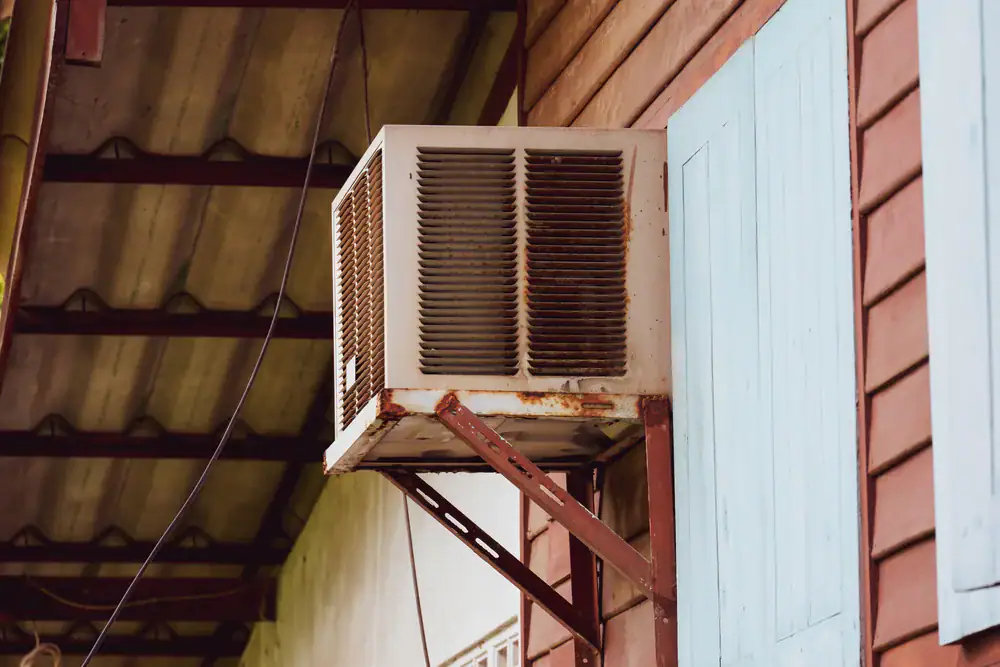
Finally, there are component exclusions. Most plans don’t cover drain pans, registers, ductwork (unless you pay for an add-on), portable or window units, or cosmetic damage. Refrigerant coverage varies widely — some plans cap reimbursement at $10 per pound, while premium tiers cover it without limit. Given how expensive refrigerant has become, that distinction matters.
Want live answers?
Connect with a All Fresh Temp expert for fast, friendly support.
With median home values in Santa Clara County approaching $2 million, the stakes around protecting your HVAC system are real. A failed AC isn’t just uncomfortable — in a market where 85% of properties in the city of Santa Clara now face major heat risk over the next 30 years, it can become a health and safety issue quickly.
Climate data projects that by 2050, residents of Santa Clara will see roughly 19 days per year above 92°F — nearly three times what was typical in 1990. That’s not a distant concern. It’s the direction this region is already heading, and it means your AC system needs to work reliably when it matters most.
A home warranty that takes three to five days to dispatch a contractor isn’t built for that reality.
Here’s something worth understanding clearly: the installation is where all your warranty protection either gets built in or quietly undermined. It’s not just about whether the unit turns on — it’s about whether the system is sized correctly for your home, whether the ductwork is designed to handle the airflow, and whether the equipment is registered with the manufacturer before the deadline passes.
When an AC unit is oversized, it short-cycles — turning on and off too frequently, wearing out components faster, and never properly controlling humidity. When it’s undersized, it runs constantly and still can’t keep up on the hottest days. Either scenario leads to premature failure, and neither scenario is covered by your home warranty because the root cause is installation error, not normal wear and tear.
A properly licensed contractor — one holding a California C-20 license and EPA Section 608 certification — performs a load calculation before recommending a system. That calculation accounts for your home’s square footage, insulation levels, window placement, ceiling height, and local climate conditions. It’s the difference between a system that lasts 15 years and one that struggles through its fifth summer.
We’ve been doing this in San Jose and across Santa Clara County since 1985. That’s four decades of installations, repairs, and maintenance calls — long enough to know what causes systems to fail early and what keeps them running well. Every technician we send out is licensed, bonded, and insured, and we don’t cut corners on sizing or ductwork because we know those shortcuts come back around. When we install a system, we register the manufacturer warranty on your behalf so you get the full coverage term, not a shortened baseline because paperwork got missed.
When your AC stops working on a 95-degree afternoon in Milpitas or Campbell, the last thing you want to hear is that a contractor will be out sometime in the next three to five business days. That’s the realistic timeline with most home warranty companies — they dispatch from a managed network, and availability isn’t guaranteed.
For families with young children, elderly parents, or anyone with a medical condition aggravated by heat, that wait isn’t just inconvenient. It’s a genuine risk. Santa Clara County’s Office of Sustainability and Resilience has been clear that extreme heat events are increasing in frequency and intensity across the region. The infrastructure around us is catching up, but the gap between a warranty company’s dispatch schedule and an actual emergency is still very real.
We offer 24/7 emergency service across San Jose and Santa Clara County. Same-day response isn’t a marketing line for us — it’s how we’ve operated for 40 years, because we know what it means to be without cooling in this climate. When you call us, you’re not going through a national call center or waiting for a dispatch queue to clear. You’re calling a family business that’s been in this community since 1985, and someone picks up.
There’s also the question of accountability. With a home warranty company, the contractor who shows up is whoever was available in the network. You don’t know their history, their licensing status, or whether they’ve worked on your specific type of system before. With us, you know exactly who’s coming — a technician with hands-on training, verified credentials, and a track record in this county. If something isn’t right after the job, you call the same number and we make it right. That’s not something a warranty company can promise you.
Home warranties aren’t worthless — but they’re not a complete safety net either. Coverage caps, exclusion clauses, maintenance requirements, and slow response times leave real gaps that homeowners in Santa Clara County feel most during the moments they can least afford it.
The most reliable protection for your AC system starts before anything breaks: with proper installation, correct sizing, documented maintenance, and a contractor who registers your equipment warranty correctly from day one. Those steps don’t just keep your system running — they keep every layer of coverage you have intact.
If you’re not sure whether your current setup gives you the protection you think it does, or if you’re dealing with an AC issue right now and don’t want to wait on a warranty company, we’re here. We’ve been serving San Jose and Santa Clara County for over 40 years, and we’re available around the clock when you need us.
Article details:
Share:
Continue learning: