Your air conditioner is struggling, and you're stuck between paying for another repair or replacing the whole system. Here's how to decide based on what actually matters.
Share:

Summary:
Age matters more than most people realize when it comes to air conditioning systems. AC units aren’t built to last forever, and once they hit a certain point, even good maintenance can’t stop the decline.
Most air conditioners last somewhere between 10 and 15 years. If yours is pushing past that range, you’re already living on borrowed time. After about 12 years, energy efficiency starts dropping, parts get harder to find, and breakdowns become more frequent. Even if your system still turns on and blows cold air, it’s probably working a lot harder than it used to—and costing you more every month because of it.
If your HVAC system is under 8 years old and the repair is straightforward, fixing it usually makes sense. But once you’re past the 10-year mark in Santa Clara County, CA, every repair becomes a judgment call.
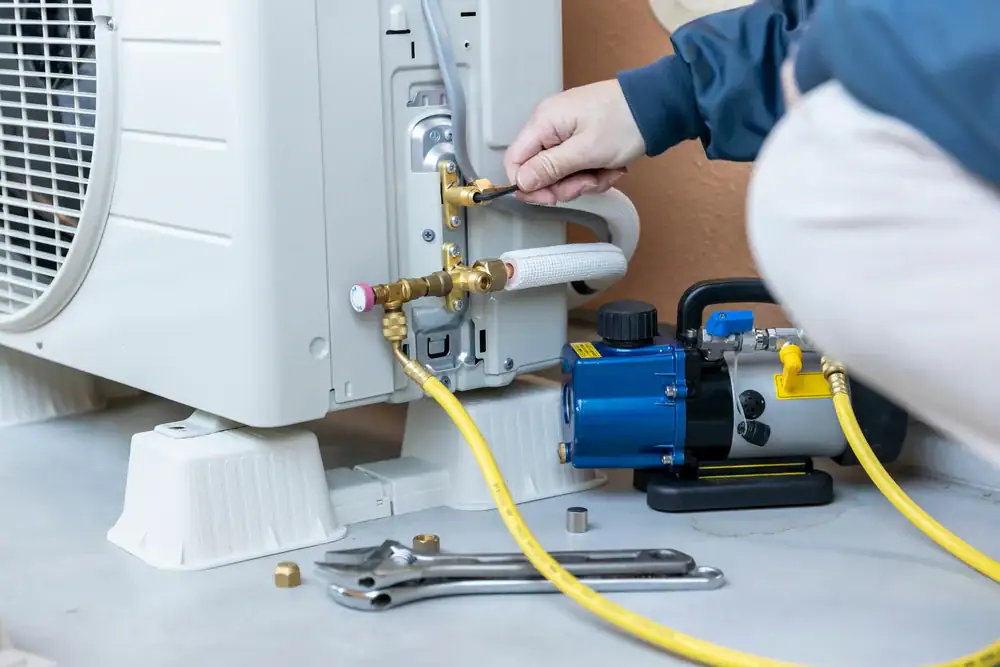
An air conditioner that’s 15 or 20 years old might still cool your house, but it’s doing it the expensive way. HVAC technology has changed, and newer systems are designed to use a lot less energy to do the same job.
Older units were built with SEER ratings around 8 to 10. That’s a measure of seasonal energy efficiency. Modern air conditioning systems come with SEER ratings of 16 or higher, and that difference isn’t small. A 25-year-old AC can use twice as much electricity as a new high-efficiency model. Over the course of a summer in Santa Clara County, CA, that adds up fast.
Even if you’ve kept up with maintenance, wear and tear reduces efficiency over time. Compressors lose power. Coils get less effective. Seals start to leak. A 15-year-old system with a SEER 12 rating when it was new might be performing closer to SEER 10 now. That means you’re paying 20% to 40% more on cooling costs compared to what a new system would cost to run.
And here’s the part that surprises people: upgrading from an old 12 SEER unit to a modern 16 SEER2 air conditioner can cut your cooling costs by around 40% per year. If your summer energy bills are $200 a month, that’s $80 back in your pocket every month the AC is running. Over five years, that’s $2,000 in savings—enough to offset a big chunk of the AC replacement cost.
Energy efficiency isn’t just about being green. It’s about your monthly budget. If your system is old and your bills keep climbing, you’re already paying for a new system. You’re just doing it $50 or $100 at a time through your utility company instead of investing in equipment that actually saves you money.
An air conditioner that’s 15 or 20 years old might still cool your house, but it’s doing it the expensive way. HVAC technology has changed, and newer systems are designed to use a lot less energy to do the same job.
Older units were built with SEER ratings around 8 to 10. That’s a measure of seasonal energy efficiency. Modern air conditioning systems come with SEER ratings of 16 or higher, and that difference isn’t small. A 25-year-old AC can use twice as much electricity as a new high-efficiency model. Over the course of a summer in Santa Clara County, CA, that adds up fast.
Even if you’ve kept up with maintenance, wear and tear reduces efficiency over time. Compressors lose power. Coils get less effective. Seals start to leak. A 15-year-old system with a SEER 12 rating when it was new might be performing closer to SEER 10 now. That means you’re paying 20% to 40% more on cooling costs compared to what a new system would cost to run.
And here’s the part that surprises people: upgrading from an old 12 SEER unit to a modern 16 SEER2 air conditioner can cut your cooling costs by around 40% per year. If your summer energy bills are $200 a month, that’s $80 back in your pocket every month the AC is running. Over five years, that’s $2,000 in savings—enough to offset a big chunk of the AC replacement cost.
Energy efficiency isn’t just about being green. It’s about your monthly budget. If your system is old and your bills keep climbing, you’re already paying for a new system. You’re just doing it $50 or $100 at a time through your utility company instead of investing in equipment that actually saves you money.
Want live answers?
Connect with a All Fresh Temp expert for fast, friendly support.
One repair isn’t the problem. It’s the pattern that matters. If you’re calling for HVAC service twice a year, or if you’ve spent $1,000+ on air conditioning repairs in the last 18 months, you’re not maintaining your AC anymore—you’re life-supporting it.
Frequent breakdowns are a sign that your system is at the end of its lifespan. And every time you fix one thing, something else is wearing out. That’s not bad luck. That’s age. When multiple components start failing in quick succession, AC replacement stops being a question of if and starts being a question of when.
The other issue is availability. If your air conditioner is old enough, parts might be hard to find or expensive to source. That turns a $300 repair into a $700 repair just because of the part itself.

If your AC was installed before 2010, there’s a good chance it runs on R-22 refrigerant, also known as Freon. That’s a problem, because R-22 has been phased out. You can’t manufacture it anymore, and what’s left is expensive and getting harder to find.
If your air conditioning system has a refrigerant leak and it uses R-22, you’re looking at a costly repair. Not only do you have to fix the leak, but you also have to recharge the system with refrigerant that now costs significantly more than it did a few years ago. And if it leaks again—which is common with older systems—you’re paying that premium all over again.
Newer HVAC systems use R-410A or other modern refrigerants that are cheaper, more environmentally friendly, and widely available. If you’re facing a refrigerant-related repair on an R-22 system in Santa Clara County, CA, that’s often the tipping point that makes AC replacement the better financial move.
Even if the repair itself isn’t outrageous, you’re still stuck with a system that’s running on outdated, expensive refrigerant. Every future repair or recharge is going to cost more than it should. At some point, you’re just postponing the inevitable.
And here’s the thing: if your air conditioner is old enough to use R-22, it’s also old enough to be inefficient, prone to breakdowns, and likely past the 10-to-15-year lifespan anyway. The refrigerant issue is just one more reason to move on.
Sometimes the issue isn’t that your AC is broken—it’s that it’s not doing the job well anymore. Maybe some rooms are too hot while others are freezing. Maybe the air feels humid even when the air conditioner is running. Maybe the system is loud, or it cycles on and off every few minutes without ever really cooling the house.
These are signs of an HVAC system that’s either undersized, oversized, or just worn out. And repairs won’t fix them. You can replace a compressor or a capacitor, but if the system itself isn’t matched to your home’s needs, you’re still going to be uncomfortable.
Older air conditioning systems also struggle with humidity control. AC units are supposed to remove moisture from the air as they cool it, but aging equipment loses that ability. You end up with a house that’s technically cool but feels clammy and uncomfortable. A new system with proper sizing and modern humidity management will solve that in ways an AC repair never could.
Then there’s noise. If your outdoor unit sounds like a lawnmower or your indoor blower is loud enough to hear in the next room, that’s not something a tune-up is going to fix. Modern AC systems are designed to run quietly—some are up to 20 times quieter than units from 20 years ago. If noise is affecting your quality of life in Santa Clara County, CA, replacement is the only real solution.
Comfort issues are easy to ignore because they’re not emergencies. But you’re living in your home every day. If your air conditioner isn’t keeping you comfortable, that’s a problem worth solving. And if your system is old enough that repairs won’t improve comfort, AC replacement isn’t an expense—it’s an upgrade to how you actually live.
The other factor is indoor air quality. Older HVAC systems don’t filter air as effectively, and they can spread dust, allergens, and odors throughout your home. A new air conditioning system with a better filter and proper airflow can make a noticeable difference in how your home feels and how healthy the air is. That’s especially important if anyone in your household deals with allergies, asthma, or respiratory issues.
There’s no universal answer to AC repair vs replace. It depends on your system’s age, how often it’s breaking down, what it’s costing you in energy efficiency, and whether it’s actually keeping you comfortable. But the decision doesn’t have to be complicated.
If your air conditioner is under 8 years old, the repair is minor, and the system has been reliable, fix it. If it’s over 12 years old, you’ve had multiple repairs in the last couple years, your energy bills are climbing, and you’re dealing with comfort problems, AC replacement is the smarter move. And if you’re somewhere in between, use the $5,000 rule or the 50% rule to see where the numbers land.
The goal isn’t to sell you something you don’t need. It’s to help you avoid spending money on an HVAC system that’s going to keep costing you. If you’re in Santa Clara County, CA and you’re trying to figure out what makes sense for your home, we can walk you through it without the pressure. Just real information, honest assessment, and a plan that actually works for your situation.
Article details:
Share:
Continue learning:
Get Your Free HVAC Quote Today
Contact our friendly team today for a free estimate and experience the difference.
Company
Support
Useful Links