California's habitability laws put real legal weight behind your rental's heating system. Here's what landlords in Santa Clara County actually need to know.
Share:
Summary:
If you own rental property in Santa Clara County, you already know the tenant protections here are serious. What catches a lot of landlords off guard is how squarely HVAC falls into legal territory — not just maintenance territory. A broken furnace in January isn’t a repair request you can schedule for next week. Under California law, it’s a habitability failure, and your tenant has real remedies available to them if you don’t move fast.
This guide walks through what the law actually requires, what “working heat” means in concrete terms, and how to stay ahead of a problem before it becomes a legal one.
California Civil Code § 1941.1 is the law that defines what makes a rental unit habitable. Heating is on that list — not as a nice-to-have, but as a legal requirement. Specifically, your unit must have heating facilities capable of maintaining a room temperature of 70°F, measured at a point three feet above the floor in every habitable room.
That’s the standard. Not “the heater turns on.” Not “it was working when the tenant moved in.” The system has to be capable of actually hitting that temperature. An old, undersized, or poorly maintained furnace that runs but can’t keep up doesn’t meet the bar.
Here’s where a lot of landlords get tripped up. California law does not require you to install air conditioning in a rental unit. Cooling is not currently listed as a habitability essential under the Civil Code — so if your unit has never had AC, you’re not legally obligated to add it.
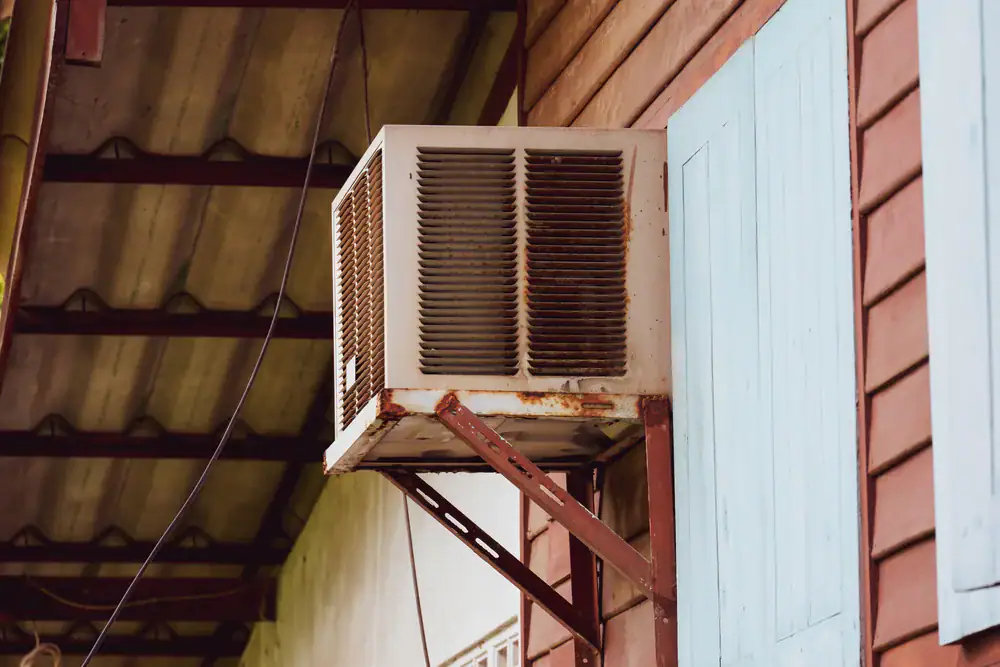
But that changes the moment an AC unit exists in the property. If an air conditioner was present when the tenant moved in, you’re generally responsible for keeping it in safe, working condition. The law’s logic is straightforward: if you offered it as part of the unit, you’re on the hook for maintaining it.
This distinction matters across Santa Clara County, where a lot of housing stock was built in the 1960s and 1970s. Many of those units have aging central AC systems or window units that were grandfathered in. If those systems are failing, the repair obligation falls on you, not the tenant.
It’s also worth watching the regulatory direction on cooling. Los Angeles County passed a mandate in 2025 requiring rental housing to maintain indoor temperatures of 82°F or cooler. California has been actively considering expanding the statewide habitability definition to include cooling standards. What’s currently optional may not stay that way. Landlords who get ahead of this now — by maintaining existing systems and understanding what they have — will be in a much better position when the rules shift.
One more thing: if a tenant brought in their own portable AC unit, that’s their equipment and their responsibility. The line is whether the unit was part of the rental at the start of the tenancy.
The honest answer is: less time than you might think. California law doesn’t give landlords a universal number of days to fix heating failures. The standard is “within a reasonable time” — and what counts as reasonable depends heavily on the circumstances.
A broken heater in the middle of a Santa Clara County winter night is not the same situation as a slow drain or a squeaky door. Nighttime temperatures here regularly drop into the 40s°F between November and February. When a tenant is sleeping in a unit that can’t maintain safe temperatures, courts and code enforcement treat that as an emergency — not a standard maintenance request.
If you don’t respond quickly, tenants in California have real options. Under Civil Code § 1942, a tenant can make the repair themselves and deduct the cost from rent if a landlord fails to address a habitability issue within a reasonable time. They can also withhold rent, file a complaint with code enforcement, or pursue a rent reduction through San Jose’s Rent Stabilization process — which applies to a significant portion of rental units in the city.
The practical takeaway: when a heating system goes down, same-day or next-day response isn’t just good customer service — it’s how you stay out of legal trouble. Having a licensed HVAC contractor you can call at any hour matters more than most landlords realize until they’re in the middle of a tenant dispute.
We offer 24/7 emergency service, including weekends and holidays, specifically because we’ve been serving Santa Clara County since 1985 and we’ve seen what happens when landlords can’t get a contractor on the phone fast enough.
Want live answers?
Connect with a All Fresh Temp expert for fast, friendly support.
Emergency HVAC situations in rental properties aren’t just uncomfortable — they create a ticking clock on your legal exposure. The faster a licensed contractor can diagnose and resolve the issue, the smaller the window for a tenant complaint to escalate into something more serious.
What makes HVAC emergencies particularly tricky for landlords is that they rarely happen at convenient times. A furnace that fails on a Friday night, a heat pump that stops working over a holiday weekend — these aren’t situations where you can leave a voicemail and wait until Monday. You need someone who can actually show up.
Not every HVAC contractor is the right fit for a rental property situation. There are a few things that matter specifically when you’re a landlord — beyond just whether someone can fix the system.
First, licensing. California requires anyone performing HVAC work valued at more than $500 to hold a valid C-20 license from the Contractors State License Board. This isn’t optional, and it’s not just a technicality. If you hire an unlicensed contractor and something goes wrong — a fire, a refrigerant leak, a failed system — your insurance coverage may not apply, and the liability lands on you. You can verify any contractor’s license at cslb.ca.gov in about 30 seconds.
Beyond licensing, you want a contractor who is bonded and insured. Bonded means there’s financial protection if the contractor causes damage or fails to complete the work. Insured means their workers are covered if something happens on your property. These aren’t negotiable when you’re managing real estate assets.
For property managers with multiple units, there’s another layer to think about: can this contractor handle different system types across different properties? Rental portfolios in Santa Clara County often include a mix of older central HVAC systems, ductless mini-splits, heat pumps, and everything in between. A contractor who only works on one brand or one system type isn’t going to serve you well at scale. We service every make and model — Trane, Carrier, American Standard, Bryant, and all others — specifically because landlords and property managers shouldn’t have to maintain a roster of different contractors for different equipment.
Documentation matters too. Written invoices, service reports, and maintenance records aren’t just good practice — they’re your paper trail if a tenant ever files a habitability complaint. A contractor who provides clear, written records of what was inspected, what was found, and what was done gives you something to point to if a dispute arises.
There’s a version of this problem that plays out quietly in a lot of rental properties across San Jose, Santa Clara, and Sunnyvale. The HVAC system is aging — maybe it’s 15 or 18 years old, maybe it’s never had a professional inspection — and the landlord figures it’s fine as long as no one complains. Then a tenant moves in, the system fails during a heat event or a cold snap, and suddenly the landlord is dealing with a code enforcement call, a rent withholding notice, or worse.
HVAC systems last between 15 and 20 years with proper maintenance. Without it, they fail earlier and less predictably. A lot of the housing stock in Santa Clara County falls squarely in that age range — properties built in the 1960s through 1980s that may have had one or two system replacements but limited documented service history.
The tenant base across Santa Clara County also shapes the risk. Renters in this region — particularly in San Jose, Palo Alto, Mountain View, and Sunnyvale — tend to be educated, financially stable, and aware of their rights. They’re more likely to know about repair-and-deduct provisions, habitability complaints, and rent stabilization petitions. That changes the risk calculus for landlords who might otherwise take a wait-and-see approach to HVAC maintenance.
Proactive maintenance is the smarter play. An annual inspection costs far less than an emergency repair, and far less than a habitability dispute. It also gives you the documentation that demonstrates you’re meeting your legal obligations — which matters if a complaint ever does arise. We offer free estimates and can assess the current condition of your system, identify what’s approaching end of life, and help you plan ahead rather than react.
For property managers handling multiple units, this is even more critical. One HVAC failure per property, multiplied across a portfolio, isn’t a maintenance line item — it’s a pattern of exposure.
In California, heating is a legal requirement, not a feature. If you own rental property in Santa Clara County, your HVAC system is part of your compliance obligation — and the consequences of ignoring it are real and well-documented.
What you need is a licensed contractor who responds fast, documents their work, and can handle whatever system you have across however many properties you manage. We’ve been serving landlords, property managers, and homeowners across Santa Clara County since 1985. If you have a system that needs attention — or you just want to know where you stand before a problem shows up — reach out to All Fresh Temp Heating & Air Conditioning for a free estimate. No pressure, no runaround. Just a straight answer about what you’re working with.
Article details:
Share:
Continue learning: