
Wildfire smoke, pet dander, winter particulates — Santa Clara County air is no joke. Here's what your furnace filter should actually be doing about it.
Share:
Summary:
Most Santa Clara County homeowners don’t think much about their furnace filter until something goes wrong — the smoke smell that lingers after a wildfire, the allergy flare-up that won’t quit, or the energy bill that keeps climbing for no obvious reason. But your furnace filter is quietly doing one of the most important jobs in your home: deciding what air your family actually breathes. In our county, where wildfire smoke rolls in every summer, winter particulates get trapped by the Diablo Range and Santa Cruz Mountains, and half the neighborhood has a dog or two, that job is harder than average. Here’s what you need to know.
Wildfire smoke season in Santa Clara County runs roughly July through October, and during a bad stretch, closing your windows is the right call. The problem is that once the windows are shut, every breath of air your household takes is being pulled through your furnace filter. If that filter isn’t rated to catch fine particles, you’re not actually protected — you’re just indoors.
The Bay Area Air Quality Management District recommends a MERV 13 or higher filter specifically for wildfire smoke events. That rating matters because MERV 13 captures up to 95% of the fine particulate matter — PM2.5 — that makes wildfire smoke dangerous. A standard MERV 8 filter, which is what a lot of homes are running, catches a much smaller fraction of those smaller particles. The gap between the two isn’t minor.
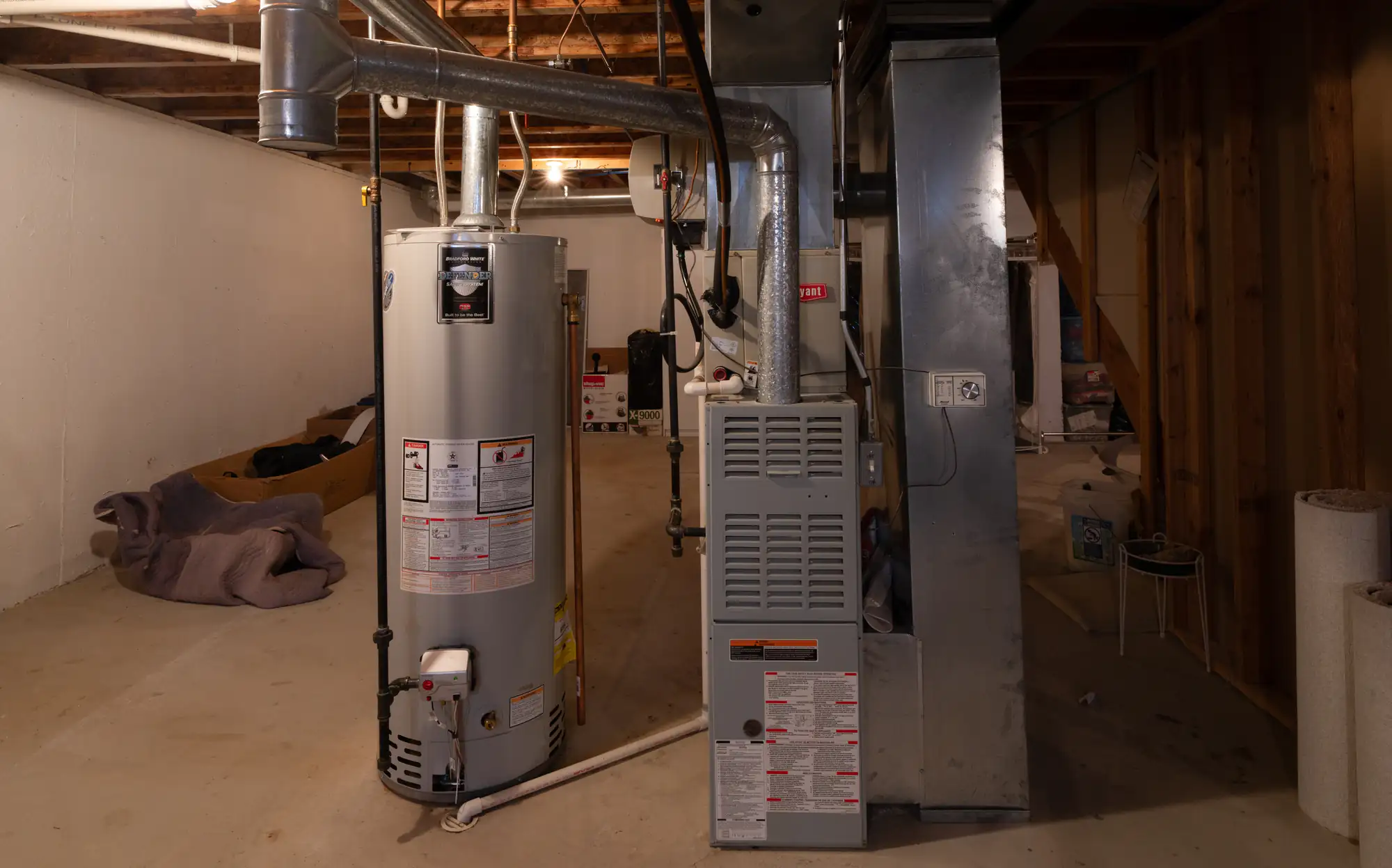
This is the question most filter guides skip, and it’s the one that matters most for older homes in Santa Clara County. A MERV 13 filter is denser than a standard filter, which means it restricts airflow more. For a modern, properly sized furnace, that’s manageable. For an aging system — say, one that’s been running since the early 2000s or before — the added resistance can strain the blower motor, reduce heating efficiency, and in some cases cause the system to overheat.
Before you swap in a high-MERV filter and call it done, it’s worth knowing what your furnace can actually support. One practical workaround is a 2-inch MERV 11 filter, which can deliver filtration performance close to a 1-inch MERV 13 while putting less strain on the system because of the greater surface area. It’s not a perfect substitute, but for older systems that can’t safely run a MERV 13, it’s a reasonable middle ground.
The deeper issue is that if your furnace is old enough that a better filter could damage it, the filter conversation is really a system conversation. A furnace from the mid-2000s or earlier is likely running at 60 to 70 percent efficiency on a good day. It wasn’t designed to handle today’s wildfire smoke seasons or the air quality standards the BAAQMD now recommends. Upgrading to a newer, high-efficiency system doesn’t just solve the filter compatibility problem — it also means lower energy bills, better airflow, and a platform that can actually support the filtration your household needs.
There’s also a timing argument specific to California. The state has announced a phased ban on new gas furnace sales beginning in 2030. Homeowners who upgrade now, while the full range of equipment options is still available, have more choices — and more time to take advantage of rebates through PG&E, Silicon Valley Clean Energy, and programs like TECH Clean California, which can offer up to $8,000 for qualifying installations. Those incentives directly reduce what you’d need to finance.
UV light purifiers installed inside your HVAC system have become more common in recent years, and there’s a fair amount of confusion about what they actually do. The short version: UV-C lights are effective against biological contaminants — bacteria, viruses, mold spores — but they don’t replace a high-MERV filter for particulate matter like wildfire smoke.
Here’s why. UV-C light works by disrupting the DNA of microorganisms, which kills or neutralizes them as air passes through the system. That’s genuinely useful, especially in a home with allergy sufferers, young children, elderly residents, or anyone immunocompromised. The National Institutes of Health has documented that HVAC systems can be a vector for building-related illness, including respiratory infections, allergic rhinitis, and asthma — and UV systems address that specific risk continuously, not just when you change a filter.
What UV lights don’t do is capture smoke particles. Particulate matter is a physical filtration problem, not a biological one. A UV system and a MERV 13 filter work on different threats, which means the most complete approach for a Santa Clara County home — especially during wildfire season — is both. The UV system handles the microbial load year-round; the high-MERV filter handles the smoke, dust, and dander.
One thing worth knowing: there are two types of UV installations. Coil-sanitizing lights are positioned near the evaporator coil, which is a common breeding ground for mold and bacteria due to condensation. Air-sterilizing lights are positioned in the return air duct and treat the air as it circulates through the system. Both have legitimate uses. A technician can help you figure out which configuration makes sense for your home’s layout and your household’s specific concerns.
Want live answers?
Connect with a All Fresh Temp expert for fast, friendly support.
If you have pets, your furnace filter is aging faster than you think. Pet hair and dander clog filters at a rate that makes the standard “change every 90 days” advice essentially useless. For homes with one or more dogs or cats, monthly replacement is the realistic cadence — and that’s not an upsell, it’s just math.
A clogged filter doesn’t just mean dirtier air. It restricts airflow through the entire system, which makes your furnace work harder to push air through the house. That extra strain shows up in your energy bill — regular filter changes can reduce energy costs by up to 15% — and over time, it accelerates wear on the blower motor and other components. Pet owners who skip filter changes aren’t just breathing worse air; they’re shortening the life of their system.
For most households with pets, a MERV 8 to MERV 13 filter is the practical range. MERV 8 captures around 85% of larger particles, including most pet hair and larger dander particles. MERV 13 captures up to 95% of smaller particles, including the fine dander that triggers allergic reactions and the PM2.5 that accumulates in Santa Clara County’s air during winter months.
The right choice depends on your system’s capacity, how many pets you have, and whether anyone in the household has respiratory sensitivities. A single small dog in a newer home with a high-efficiency furnace? MERV 11 or 13 is probably fine. Multiple large dogs in a home with an older system? You may need to stay at MERV 8 to avoid airflow restriction, and compensate with more frequent changes.
One misconception worth clearing up: HEPA filtration is not an option for standard furnace filter slots. HEPA filters — the kind used in portable air purifiers — are too restrictive for most residential HVAC systems. They’re rated at roughly MERV 17, which would severely limit airflow through a typical furnace. For furnace filtration, MERV 13 is the highest rating most residential systems can safely support.
For pet owners dealing with persistent allergy symptoms despite regular filter changes, a UV light system is worth considering as a complement — not a replacement — to good filtration. Pet dander can carry bacteria and other biological material that a UV system addresses directly. Combining monthly MERV 11 or 13 filter changes with a UV installation gives you the most complete coverage for a pet-heavy household.
Santa Clara County has a specific air quality problem that most residents know about but don’t fully connect to their indoor environment. The Diablo Range to the east and the Santa Cruz Mountains to the west create a natural bowl that traps particulate pollution during winter months. The BAAQMD has documented that the county experiences PM2.5 exceedances many times each winter, driven by wood smoke, traffic, industrial activity, and the simple fact that wind can’t easily clear the valley the way it does in more coastal communities.
On top of that, Spare the Air alerts — issued when the Air Quality Index is forecast to exceed 100 — have become a regular feature of Santa Clara County life. During those periods, the BAAQMD specifically recommends keeping windows closed and relying on your HVAC system to filter indoor air. That’s a direct instruction to trust your furnace filter to protect your household — which is a reasonable ask only if that filter is actually up to the job.
For homeowners in San Jose, Sunnyvale, Milpitas, Campbell, or any of the communities closer to the valley floor, this is a year-round reality, not just a wildfire-season concern. Winter particulate events and summer smoke events together mean there’s no real off-season for indoor air quality in this county.
This is the context that makes furnace installation financing worth talking about honestly. A lot of homeowners know their system is aging, know their filters aren’t keeping up, and have probably gotten a quote at some point that stopped the conversation cold. A furnace installation in Santa Clara County typically runs between $2,500 and $5,400 depending on the system and the home. That’s a real number, and for most families it doesn’t come out of a checking account without planning. But spread over monthly payments — especially with 0% APR promotional financing for qualified applicants — it becomes a different kind of decision. And when you factor in rebates through PG&E, Silicon Valley Clean Energy, or TECH Clean California, the amount you’re actually financing shrinks further.
The point isn’t to push anyone toward a system they don’t need. If your furnace is relatively new and a filter upgrade solves the problem, that’s the right answer. But if you’ve been putting off a replacement because the upfront number felt impossible, financing changes that math. And in Santa Clara County, where the air quality case for a better system is well-documented, it’s worth running the actual numbers before deciding to wait another season.
For most Santa Clara County households, the answer to better indoor air quality starts with the right filter — MERV 11 or 13 for smoke and allergy protection, changed monthly if you have pets, and paired with a UV system if biological contaminants are a concern. That’s the practical baseline for a home dealing with wildfire smoke seasons, winter particulate events, and the everyday reality of pet ownership.
Where it gets more complicated is when the furnace itself is the limiting factor. An older system that can’t support a higher-MERV filter, or one that’s losing efficiency year over year, is a problem that filter upgrades alone can’t solve.
If you’re not sure where your system stands, or if you’ve been sitting on a quote that felt out of reach, we’re happy to walk through it with you. All Fresh Temp has been serving Santa Clara County since 1985, and we offer free estimates and financing options to make sure cost doesn’t have to be the reason a family breathes worse air than they should.
Article details:
Share:
Continue learning: