
Hear from Our Customers
You’re not looking for a sales pitch. You’ve got water coming through your ceiling, or you just watched shingles fly off during last night’s wind event, or you’re staring at a quote that makes no sense.
What you actually need is someone who understands that homes in the Santa Cruz Mountains take a beating. The atmospheric rivers that dump 5-10 inches of rain in a day. The 50-70 mph winds that rip through the ridgelines. The fire risk that keeps you up at night during dry season.
Emergency roof repair in Lexington Hills, CA isn’t just about slapping a tarp on and calling it good. It’s about stopping the damage before it spreads to your insulation, your drywall, your electrical. It’s about protecting a $700,000 to $2.4 million investment from turning into a six-figure insurance claim.
When we handle roof leak repair in Lexington Hills, CA, you get your home sealed up, your family safe, and your property value protected. That’s the outcome that matters.
We’ve been family-owned and operated since 1985. For over 40 years, we’ve served San Jose and Santa Clara County with the kind of work that keeps customers calling us back.
We know what it’s like to navigate those unpaved country roads when they’re slick from rain. We understand the access challenges that come with mountain properties. And we’ve seen what happens when contractors who don’t know this area try to apply valley solutions to ridge-line problems.
You’re dealing with a Very High Fire Hazard Severity Zone, homes built between 1925-1960, and weather that swings from intense heat to heavy storms. That requires local knowledge, not just a truck and a ladder.
First, we actually answer the phone. If it’s an emergency, we get someone out to assess the damage as quickly as possible—because waiting three days for an estimate while water pours into your home isn’t acceptable.
During the inspection, we’re looking at the obvious damage and what’s happening underneath. Missing shingles are one thing. Compromised decking, damaged flashing, or ventilation issues that’ll cause problems six months from now—that’s what separates a real roof repair contractor in Lexington Hills, CA from someone just trying to make a quick buck.
You get a clear explanation of what’s wrong, what needs to happen, and what it costs. No upselling. No scare tactics. If your roof needs a full replacement, we’ll tell you. If it needs a repair, we’ll tell you that too.
Then we handle the work with materials that make sense for this climate. Class A fire-rated options for wildfire protection. Products that can handle the thermal cycling from hot days to cool nights. Installation that accounts for the wind exposure your property faces.
Ready to get started?
When you hire us for roof damage repair in Lexington Hills, CA, you’re getting a full assessment of storm impact—not just the shingles you can see from the ground. We document everything for insurance purposes, because California wind damage claims averaged $12,444 last year, and you want that claim filed correctly the first time.
The repair itself covers the damaged area plus a thorough check of surrounding sections. Storms don’t damage roofs in perfect squares. Water finds the path of least resistance, and wind hits the vulnerable spots you didn’t know existed.
We also clear debris that accumulates in valleys and against chimneys—the stuff that turns into kindling during fire season or dams up water during heavy rain. In a Very High Fire Hazard Severity Zone, that’s not optional maintenance. It’s protection.
You get quality materials rated for Northern California weather, not the cheapest option that’ll fail in three years. And you get work that’s done right, so you’re not calling someone else to fix our mistakes six months later.
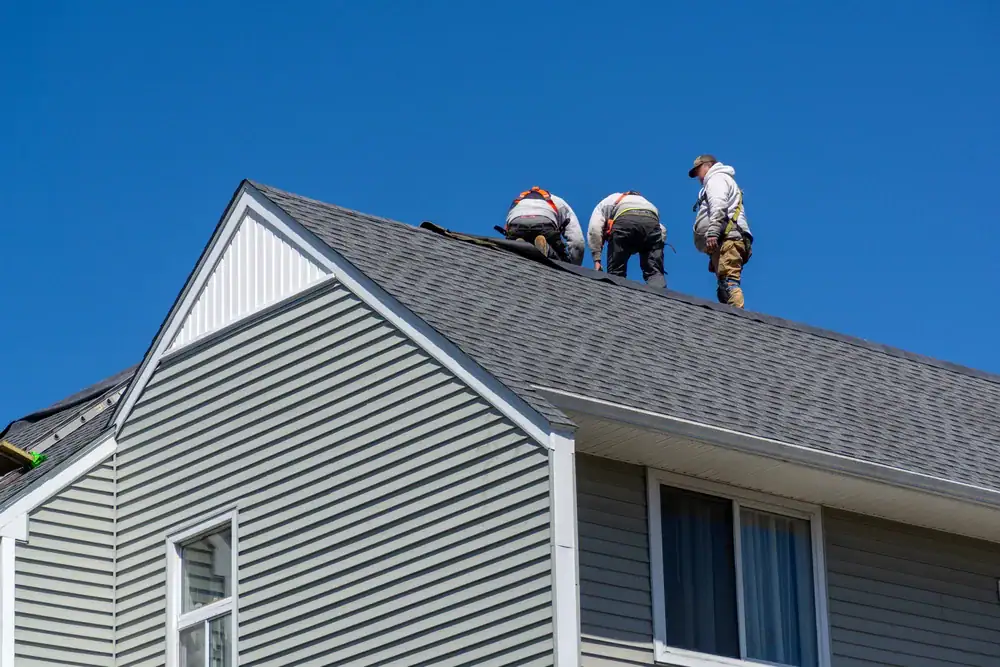
Roof repair cost in Lexington Hills, CA typically ranges from a few hundred dollars for minor leak fixes to several thousand for significant storm damage repair. The average roof replacement in California runs $9,526, with most falling between $5,868 and $13,217, but repairs are obviously less.
What drives the cost is the extent of damage, the type of roofing material on your home, and how accessible the damaged area is. A ranch-style home with easy roof access costs less to repair than a multistory cabin with steep pitches and limited access points.
Here’s what matters more than the number: getting it fixed correctly the first time costs less than getting it fixed twice. Cheap repairs that don’t address underlying issues—damaged decking, compromised flashing, inadequate ventilation—turn into bigger problems. You’re better off paying for real work than paying twice for shortcuts.
Yes, and we document everything you need for the claim. Insurance companies want proof of sudden, external damage—not gradual wear and tear. That means photos, detailed notes on what the storm did, and clear documentation of the repair scope.
California saw roof claims top $30 billion in 2024, with wind and hail damage making up a huge portion. Insurance adjusters know what storm damage looks like versus deferred maintenance. We make sure your claim shows exactly what happened and when.
We’ll walk you through what your policy likely covers, but we’re not adjusters—we fix roofs. What we can do is give you the documentation and explanation you need to file a strong claim. Then we work with whatever the insurance approves, or discuss your options if they don’t cover everything.
For true emergencies—active leaks, major storm damage, situations where waiting causes more damage—we respond as quickly as we can get someone to your property. That might be same-day, or it might be next-day depending on call volume and weather conditions.
Here’s the reality: during major storm events, everyone’s roof is leaking at once. We prioritize based on severity and safety. A roof that’s actively pouring water into your home gets priority over a roof with a small leak that can be contained with a bucket.
If we can’t get to you immediately, we’ll tell you exactly when we can and what you should do in the meantime. Temporary tarping, moving valuables, documenting damage—there are steps you can take while waiting that minimize the impact. We’d rather be honest about timing than promise same-day service and not deliver.
You need Class A fire-rated materials—that’s non-negotiable in a Very High Fire Hazard Severity Zone. Beyond that, it depends on your home’s style, your budget, and how long you plan to stay.
Asphalt shingles are common and cost-effective, but California’s sun breaks them down faster than it would in cooler climates. You’re looking at UV damage, thermal cycling from hot days to cool nights, and the occasional hail event. Quality architectural shingles hold up better than basic three-tab options.
Metal roofing is gaining popularity in mountain areas because it’s fire-resistant, sheds debris and snow well, and lasts 40-70 years. The upfront cost is higher, but you’re not replacing it in 15 years. Tile and slate are also options for certain home styles, though they’re heavier and require proper structural support.
What matters most is proper installation. The best material installed poorly fails faster than a mid-grade material installed correctly. We match the material to your home, your budget, and the specific exposure your property faces.
Yes, and we’ve worked on plenty of them. Homes built between 1925-1960 in Lexington Hills have character, but they also have quirks. Roof decking might be spaced boards instead of plywood sheathing. Flashing might be outdated. Ventilation might not meet modern standards.
When we repair an older roof, we’re not just patching the surface. We’re making sure the underlying structure can support the repair and won’t cause problems down the line. Sometimes that means reinforcing decking. Sometimes it means updating flashing to current standards so water doesn’t find its way in through old weak points.
The goal is to preserve what works while upgrading what doesn’t—without turning a repair into an unnecessary full replacement. Older homes in this area are part of what makes Lexington Hills special. We treat them that way.
First, stay safe. Don’t climb on your roof during or immediately after a storm, especially if it’s wet or windy. You can assess damage from the ground or from inside your attic if it’s safe to do so.
If you have an active leak, contain it as best you can—buckets, towels, moving valuables away from the area. Take photos and videos of the damage, both inside and outside. Document what the storm did and when it happened. That’s critical for insurance claims.
Call a roof repair contractor in Lexington Hills, CA to assess the damage professionally. If you can’t get someone out immediately and the damage is severe, a temporary tarp can prevent further water intrusion—but make sure it’s secured properly. A loose tarp in high winds causes more damage than no tarp at all. We’ll guide you through temporary measures if we can’t get there right away, and then handle the permanent repair as soon as possible.
Other Services we provide in Lexington Hills