
If your AC keeps turning on and off every few minutes, you're dealing with short cycling—a problem that drives up energy bills and can damage your compressor if left unchecked.
Share:
Summary:
Short cycling is when your air conditioner runs for a short burst—usually just a few minutes—then shuts off before it finishes a full cooling cycle. In a healthy system, your AC should run for about 10 to 20 minutes at a time, cool your home to the temperature you set, then take a break. When it’s short cycling, it never makes it that far.
The system turns on, starts working, then something triggers it to shut down early. Once it cools off or resets, it tries again. And again. This constant on-off pattern is hard on your equipment, frustrating for you, and expensive on your energy bill. It’s also a clear sign that something in your system isn’t working the way it should.
Here’s the part that catches most people off guard: your AC uses the most power when it starts up. That initial surge of electricity is what gets the compressor running and the refrigerant moving. If your system is kicking on every couple of minutes instead of running steady cycles, you’re paying for that startup spike over and over again—without getting the cooling you’re paying for.
The numbers add up fast. Homeowners dealing with AC short cycling often see their energy bills jump by 30% or more during the summer, even though their house feels less comfortable than it did before. You’re spending more and getting less. That’s the frustrating reality of a system that can’t finish what it starts.
But the real cost isn’t just on your monthly bill. It’s what’s happening inside your AC unit. Every time the compressor starts, it puts strain on the motor, the electrical components, and the refrigerant system. Those parts weren’t designed to handle dozens of starts per hour. Over time, that kind of stress leads to premature wear, breakdowns, and eventually, compressor failure. And if your compressor goes, you’re often looking at a repair bill that rivals the cost of a new system. That’s why catching short cycling early isn’t just about comfort—it’s about protecting your investment.
The other thing short cycling steals from you is actual cooling. When your system shuts off too soon, it doesn’t have time to move conditioned air through your whole house. You end up with hot spots, uneven temperatures, and rooms that never quite feel right. It also means your system isn’t running long enough to pull humidity out of the air, which makes everything feel stickier and less comfortable, even if the thermostat says it’s the right temperature.
Here’s the part that catches most people off guard: your AC uses the most power when it starts up. That initial surge of electricity is what gets the compressor running and the refrigerant moving. If your system is kicking on every couple of minutes instead of running steady cycles, you’re paying for that startup spike over and over again—without getting the cooling you’re paying for.
The numbers add up fast. Homeowners dealing with AC short cycling often see their energy bills jump by 30% or more during the summer, even though their house feels less comfortable than it did before. You’re spending more and getting less. That’s the frustrating reality of a system that can’t finish what it starts.
But the real cost isn’t just on your monthly bill. It’s what’s happening inside your AC unit. Every time the compressor starts, it puts strain on the motor, the electrical components, and the refrigerant system. Those parts weren’t designed to handle dozens of starts per hour. Over time, that kind of stress leads to premature wear, breakdowns, and eventually, compressor failure. And if your compressor goes, you’re often looking at a repair bill that rivals the cost of a new system. That’s why catching short cycling early isn’t just about comfort—it’s about protecting your investment.
The other thing short cycling steals from you is actual cooling. When your system shuts off too soon, it doesn’t have time to move conditioned air through your whole house. You end up with hot spots, uneven temperatures, and rooms that never quite feel right. It also means your system isn’t running long enough to pull humidity out of the air, which makes everything feel stickier and less comfortable, even if the thermostat says it’s the right temperature.
Want live answers?
Connect with a All Fresh Temp expert for fast, friendly support.
Not every short cycling problem requires a service call. There are a couple of things you can check yourself before picking up the phone. Start with your air filter. If it looks dirty or clogged, replace it. Turn the system off, swap in a clean filter, wait a few minutes, then turn it back on and see if the problem improves. This is the easiest and most common fix, and it’s something every homeowner should be doing regularly anyway.
Next, take a look at your thermostat. Make sure it’s set to “cool” and not bouncing between modes. Check the temperature setting and confirm it’s not being affected by direct sunlight, nearby appliances, or poor placement. If your thermostat is old or acting glitchy, replacing it might solve the issue. Modern programmable or smart thermostats are more accurate and can actually help prevent short cycling by maintaining more consistent temperatures.
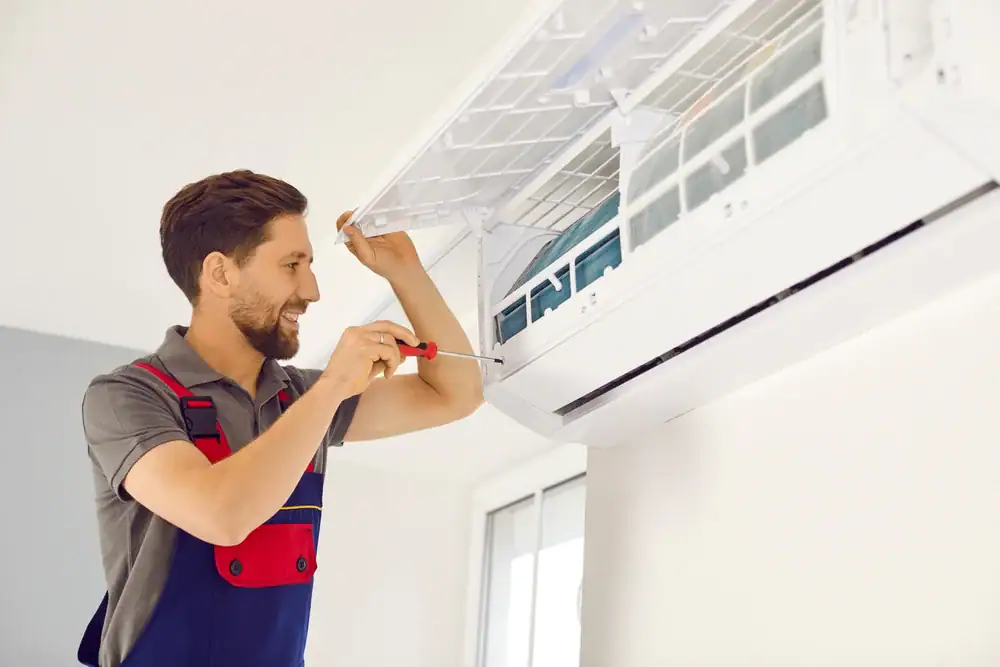
If you’ve checked the filter and the thermostat and your AC is still short cycling, it’s time to call a professional. Refrigerant leaks, frozen coils, electrical problems, and compressor issues aren’t DIY projects. They require specialized tools, training, and in some cases, certification to handle safely. Trying to fix these on your own can make the problem worse, void your warranty, or even put you at risk.
Here are the red flags that mean you should stop troubleshooting and schedule AC repair: ice forming on the indoor coil or refrigerant lines, water pooling around the indoor unit, hissing or bubbling sounds near the coils, the system shutting off within minutes every single time, or strange electrical smells or sounds coming from the unit. Any of these point to something more serious than a dirty filter.
You should also call if the problem started after recent work was done on your system, if your AC is more than 10 years old and showing other signs of wear, or if your energy bills have spiked without explanation. These are all signs that the issue isn’t going to resolve itself and that waiting will only make it more expensive to fix later.
The other thing to keep in mind: short cycling puts your compressor at risk. The compressor is the heart of your AC system, and it’s also the most expensive part to replace. If it fails because of prolonged short cycling, you’re often looking at repair costs that approach the price of a new system. Catching the problem early—before the compressor is damaged—can save you thousands of dollars.
When you call us for AC repair in Sunnyvale, CA, we’ll start by asking you a few questions about what you’re experiencing. How long has it been happening? Have you noticed any other symptoms? When did you last change your filter? This helps us narrow down the possible causes before we even arrive.
Once we’re at your home, we’ll do a full system check. We’ll inspect the air filter, test the thermostat, check refrigerant levels, look for leaks, examine the evaporator and condenser coils, test electrical components like the capacitor and control board, and measure airflow and temperature differentials. We’re not just fixing the symptom—we’re finding the root cause so the problem doesn’t come back a week later.
If it’s something simple like a clogged filter or a bad thermostat, the fix might happen on the spot. If it’s a refrigerant leak, we’ll need to locate the leak, repair it, and then recharge the system to the proper level. If it’s an oversized unit or a failing compressor, we’ll walk you through your options and help you understand what makes sense for your situation and your budget. We won’t push you toward a replacement if a repair will do the job. We’ll give you the information you need to make the right call.
One thing to look for when choosing any HVAC company: transparency. If a technician shows up, glances at your system for two minutes, and immediately tells you that you need a whole new unit, that’s a red flag. Good techs take the time to diagnose the problem, explain what they found, and give you options. They should also be able to answer your questions without making you feel like you’re bothering them. You’re the one paying the bill—you deserve to understand what’s happening and why.
After the repair, we’ll test the system to make sure it’s cycling properly, holding the set temperature, and running efficiently. We’ll also give you some maintenance tips to help prevent the problem from happening again, like how often to change your filter or what to watch for during Sunnyvale’s hotter months.
Short cycling isn’t something you should ignore or just live with. It’s a warning sign that something in your system isn’t working right, and the longer it goes on, the more damage it does. Start with the simple stuff—check your filter, look at your thermostat, and make sure nothing obvious is blocking airflow. But if the problem doesn’t clear up, don’t wait. The cost of a service call now is a lot less than the cost of a new compressor or a full system replacement later.
If your AC keeps turning on and off and you’re in the Sunnyvale area, we’re here to help. With over 40 years of experience serving local homeowners, our team at All Fresh Temp knows how to diagnose and fix short cycling fast—so you can get back to being comfortable in your own home.
Article details:
Share:
Continue learning:
