Not every AC problem is an emergency. But five specific issues can turn dangerous fast in Santa Clara County's summer heat.
Share:
Summary:
Not every weird noise or warm breeze from your vents requires an emergency call. A filter that needs changing or a thermostat setting that got bumped—those can wait until business hours.
But when your AC creates a safety risk, stops working entirely during extreme heat, or shows signs of a problem that’s actively getting worse, that’s when the clock starts ticking. Emergency AC services exist for situations where waiting even a few hours could mean the difference between a repair and a replacement—or between an inconvenience and a genuine hazard.
In Santa Clara County, where heat waves can last for days and overnight temperatures barely drop, a malfunctioning AC isn’t just uncomfortable. It can become a health concern, especially for young kids, elderly family members, or anyone with existing medical conditions. When your system fails during a stretch of 100-degree days with no overnight relief, you’re not just dealing with discomfort. You’re dealing with a situation that needs to be fixed fast.
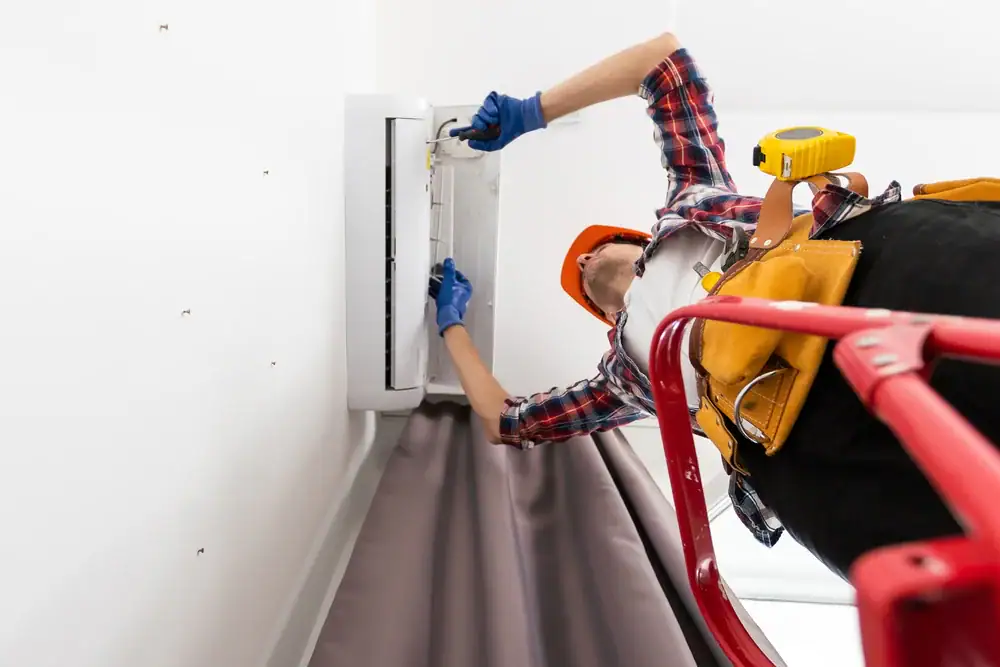
If you smell something burning when your AC turns on, don’t ignore it. And definitely don’t keep running the system to “see if it goes away.”
A burning smell—whether it’s like melting plastic, rubber, or even something fishy—usually means electrical components inside your AC are overheating. When wires get too hot, their insulation starts to break down and release that distinct chemical odor. This can happen because of faulty wiring, a failing motor, or an electrical short somewhere in the system. A smoke smell is even more serious, indicating that components may already be damaged or actively burning.
The reason this is an emergency? Overheated electrical components can spark. And sparks near flammable materials can lead to fires. Electrical fires can develop quickly, and by the time you see visible flames or smoke, the problem has already escalated. Your circuit breaker is designed to cut power when it detects an overload, but if the issue is a slow-developing short or a component that’s gradually failing, the breaker might not trip until it’s too late.
If you catch a burning or smoke smell, turn off your AC at the thermostat and flip the breaker. Don’t try to diagnose the problem yourself, especially if you’re not sure where the smell is coming from. Electrical issues inside HVAC systems involve high voltage and complex wiring—things that require proper tools and training to handle safely.
Once the power is off, call for emergency AC repair. We can inspect the system, identify whether it’s a motor, capacitor, wiring issue, or something else, and make the necessary repairs before the problem turns into something much worse. This isn’t the kind of thing you want to put off until Monday morning.
If you smell something burning when your AC turns on, don’t ignore it. And definitely don’t keep running the system to “see if it goes away.”
A burning smell—whether it’s like melting plastic, rubber, or even something fishy—usually means electrical components inside your AC are overheating. When wires get too hot, their insulation starts to break down and release that distinct chemical odor. This can happen because of faulty wiring, a failing motor, or an electrical short somewhere in the system. A smoke smell is even more serious, indicating that components may already be damaged or actively burning.
The reason this is an emergency? Overheated electrical components can spark. And sparks near flammable materials can lead to fires. Electrical fires can develop quickly, and by the time you see visible flames or smoke, the problem has already escalated. Your circuit breaker is designed to cut power when it detects an overload, but if the issue is a slow-developing short or a component that’s gradually failing, the breaker might not trip until it’s too late.
If you catch a burning or smoke smell, turn off your AC at the thermostat and flip the breaker. Don’t try to diagnose the problem yourself, especially if you’re not sure where the smell is coming from. Electrical issues inside HVAC systems involve high voltage and complex wiring—things that require proper tools and training to handle safely.
Once the power is off, call for emergency AC repair. We can inspect the system, identify whether it’s a motor, capacitor, wiring issue, or something else, and make the necessary repairs before the problem turns into something much worse. This isn’t the kind of thing you want to put off until Monday morning.
Want live answers?
Connect with a All Fresh Temp expert for fast, friendly support.
When your AC stops working on a mild 75-degree day, it’s inconvenient. When it fails during a Santa Clara County heat wave—when outdoor temps are hitting 105 and your house is climbing into the 90s—it’s an emergency.
Extreme heat isn’t just uncomfortable. It’s dangerous. Heat exhaustion and heat stroke are real risks, especially for children, elderly adults, and anyone with heart or respiratory conditions. When overnight temperatures stay in the 70s and 80s across San Jose, Gilroy, and Morgan Hill, your home never gets a chance to cool down naturally. Without a functioning AC, indoor temperatures can quickly become unsafe.
And here’s the other problem: when everyone’s AC is running at full capacity during a heat wave, HVAC companies get slammed with service calls. If you wait until tomorrow to call, you might be waiting days for an appointment. That’s why total system failure during extreme heat qualifies as an emergency—because the longer you wait, the harder it becomes to get help, and the more your home turns into an oven.
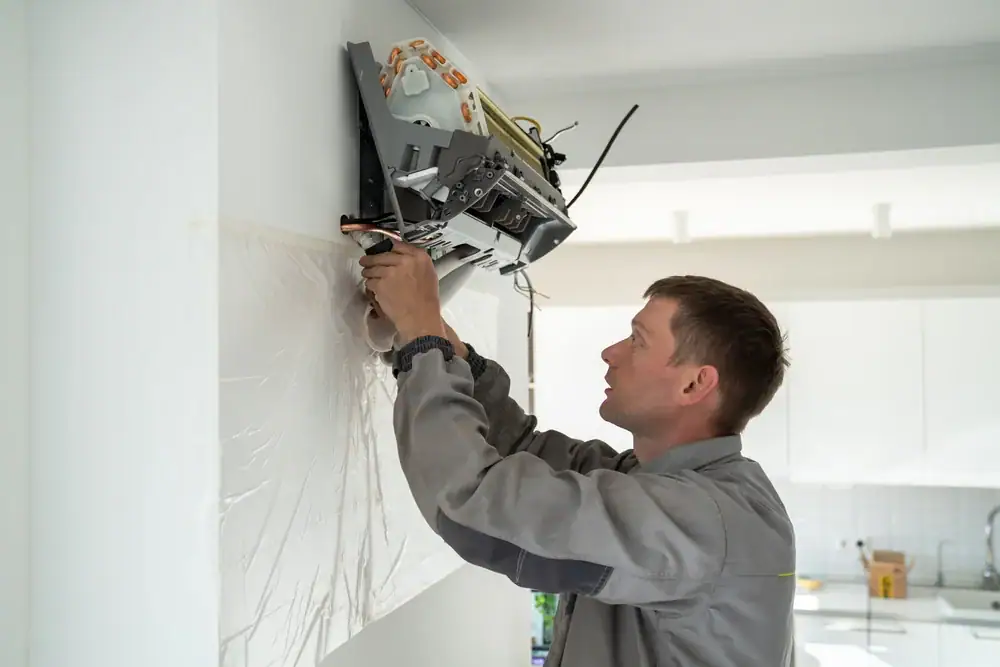
Air conditioners are designed to handle heat, but they’re not invincible. When outdoor temperatures climb above 95 degrees, your AC has to work significantly harder to move heat out of your home. The hotter it gets outside, the less efficient the system becomes.
Most residential AC units can cool your home to about 20 degrees below the outdoor temperature. So if it’s 100 degrees outside, your AC might struggle to get your house below 80—even when it’s running perfectly. But when temperatures push into the 105-110 range, which happens during Santa Clara County’s worst heat waves, your system is operating at the absolute edge of its capacity.
That kind of stress exposes weak points. A compressor that’s been running fine all summer might overheat and fail. A capacitor that’s on its last legs might finally give out. Dirty condenser coils—which are supposed to release heat—can’t do their job effectively, causing the whole system to overheat and shut down. And if your AC is more than 10-15 years old, the combination of age and extreme heat can push it past the breaking point.
The problem compounds itself. Your AC runs longer and longer trying to keep up with the heat. Components that normally get a break between cooling cycles don’t get a chance to cool down. Internal temperatures rise. Parts that were marginal become failures. And suddenly, your system stops working entirely—right when you need it most.
If your AC fails during a heat wave, don’t wait. Call for emergency AC services in Santa Clara County. We can diagnose whether you’re dealing with something fixable—like a tripped safety switch or a blown capacitor—or something more serious that requires a major repair or replacement. Either way, the faster you get help, the faster you can get your home back to a safe temperature.
Refrigerant is what allows your AC to actually cool the air. It absorbs heat from inside your home, carries it outside, and releases it. When your system has a major refrigerant leak, that whole process breaks down. You’ll notice the air coming from your vents getting warmer and warmer until eventually it’s just blowing room-temperature air.
Small leaks can develop slowly over time. You might notice your AC isn’t cooling as well as it used to, or it’s running longer to reach the set temperature. Those are problems, but they’re not always emergencies. A major leak, though—one that causes a sudden and complete loss of cooling—falls into a different category.
Here’s why it’s urgent. First, without refrigerant, your AC can’t cool your home at all. During a Santa Clara County summer, that’s not something you can live with for long. Second, when refrigerant levels drop too low, your compressor can overheat and fail. Compressor replacement is one of the most expensive AC repairs you can face—often costing as much as a new system. If a leak is caught early, before the compressor gets damaged, you’re looking at a much smaller repair bill.
Third, depending on the type of refrigerant your system uses, leaks can pose environmental and health concerns. Older systems use refrigerants that are being phased out, and exposure to high concentrations can cause dizziness, headaches, or worse in enclosed spaces.
If your AC suddenly stops cooling and you suspect a refrigerant leak—maybe you hear a hissing sound near the outdoor unit, or you see ice forming on the refrigerant lines—turn off the system and call for emergency AC repair. We can locate the leak, repair it, recharge the system with the correct amount of refrigerant, and check for any damage to the compressor or other components. This isn’t something you can fix yourself, and it’s not something you should ignore.
Most AC problems can wait for a regular service appointment. But when you’re dealing with burning smells, repeated breaker trips, total system failure during extreme heat, or major refrigerant leaks, waiting isn’t an option. These are the situations that can damage your equipment, create safety hazards, or leave your home at dangerous temperatures during the worst heat of the summer.
If you’re facing any of these issues right now, don’t try to tough it out or hope the problem fixes itself. Turn off your AC if it’s creating a burning smell or tripping breakers repeatedly. Open windows if it’s safe to do so, use fans to circulate air, and get help from a professional who can diagnose and fix the problem fast.
We’ve been handling emergency HVAC services in Santa Clara County since 1985. If your system is showing any of the warning signs we’ve covered here, reach out. The faster you act, the better your chances of avoiding a bigger—and more expensive—problem down the road.
Article details:
Share:
Continue learning:
Get Your Free HVAC Quote Today
Contact our friendly team today for a free estimate and experience the difference.
Company
Support
Useful Links