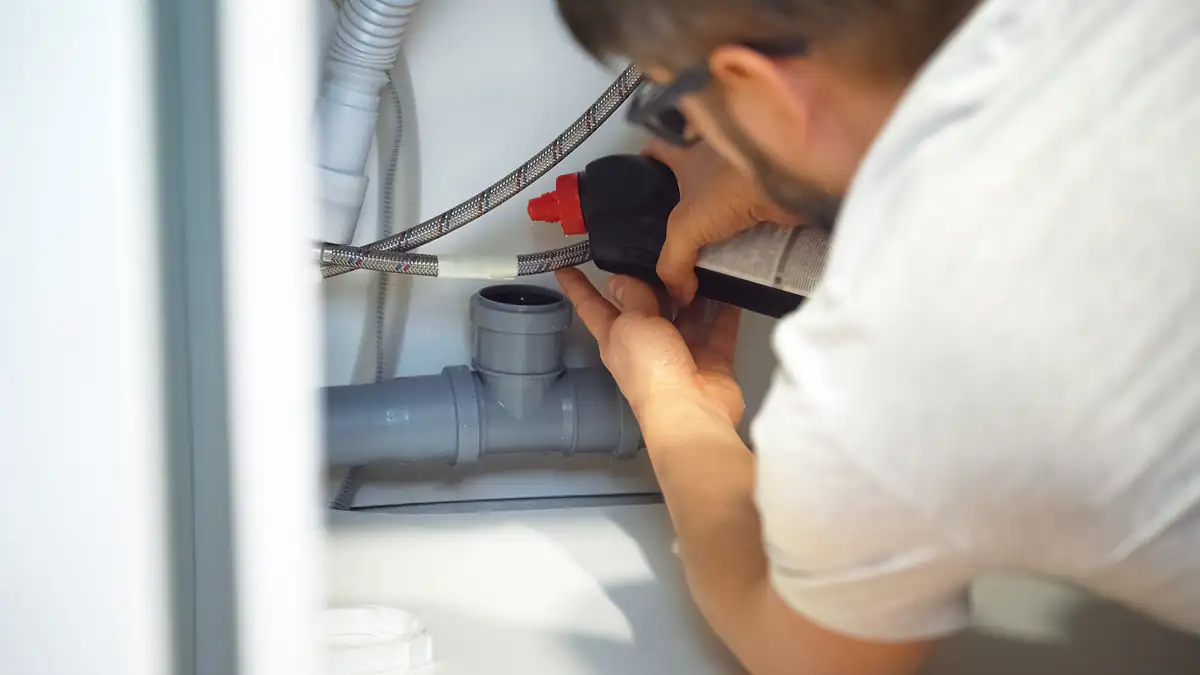
What does mini split installation actually involve in Santa Clara County? Here's an honest breakdown of the process, costs, and what separates a good install from a bad one.
Share:
Summary:
A lot of homes throughout Santa Clara County weren’t built with central air in mind. If yours is one of them — a 1960s ranch in Willow Glen, a converted garage in Sunnyvale, a new ADU in the backyard — you’ve probably been looking at mini splits as the practical fix. And they are. But the gap between a system that runs beautifully for 20 years and one that causes headaches starts at installation. We’ll walk you through what the process actually looks like, what it costs, and what you should expect from any contractor you hire to do the work.
Most people picture mini split installation as a one-day job — someone shows up, mounts a unit, and leaves. That’s the surface version. A proper install starts well before anyone picks up a drill.
It begins with a load calculation. This is how we determine the right BTU capacity for each room or zone. Skip this step and you’ll likely end up with an oversized unit that short-cycles, never properly dehumidifies, and wears out faster than it should. It’s one of the most common mistakes in the industry, and it’s entirely avoidable.
From there, we handle permitting, install the indoor and outdoor units, run the refrigerant line set, set up condensate drainage, and connect the electrical circuit — usually a dedicated 220–240V line. After everything’s in place, the system gets commissioned: refrigerant charged by weight, airflow verified, all modes tested. That final step is what separates a working system from a system that’s actually dialed in.
In California, anyone installing a mini split system is required to hold a C-20 Warm-Air Heating, Ventilating and Air-Conditioning contractor license issued by the CSLB. That’s not a suggestion — it’s the law. Technicians handling refrigerant also need EPA Section 608 certification. If a contractor can’t confirm both, that’s a hard stop.
The permit side of things catches a lot of homeowners off guard. The City of San Jose requires permits for all new HVAC installations, mini splits included. The permit package typically involves the AHRI certificate for your specific equipment, a wiring diagram, a site sketch showing where the outdoor unit will be placed, proof of contractor license and insurance, and — for California — CF1R Alt2E forms registered with CalCerts or CHEERS for Title 24 compliance. Depending on the scope of the project, HERS testing may also be required to verify the system meets California’s energy efficiency standards.
We handle all of this. Pulling permits, scheduling inspections, managing the paperwork — that’s part of what you’re paying for when you hire us. It’s not extra. It’s standard.
Why does it matter so much? Because unpermitted HVAC work creates real problems down the road. Cities can issue fines or require removal of the system. Many manufacturers void parts warranties if there’s no permit on record. And when you go to sell your home, unpermitted work shows up on disclosure forms and can derail a sale or force last-minute remediation. Getting it done right the first time is always less expensive than fixing it later.
We’ve been doing this work in Santa Clara County since 1985. We know the local permit offices, we know what inspectors look for, and we know how to get projects through without delays. That institutional knowledge is something you can’t replicate with a contractor who just started operating in the area.
A ductless mini split system has two main components: an indoor air handler mounted on the wall (or ceiling, or floor — depending on the unit type) and an outdoor compressor unit. The two are connected by a refrigerant line set that runs through a small hole in the wall — typically three inches in diameter. No ductwork required.
This matters enormously for Santa Clara County’s housing stock. A large share of homes in San Jose, Santa Clara, and Sunnyvale were built in the 1950s through 1970s without central air conditioning. Retrofitting traditional ductwork into these homes means cutting through walls, ceilings, and attic space — an invasive, expensive process that often costs more than the HVAC system itself. A ductless system sidesteps all of that.
There’s also an efficiency argument that’s particularly strong in the Bay Area. Homes with forced-air systems lose roughly 20 to 30 percent of their energy through duct leakage and heat transfer. Mini splits eliminate that loss entirely. With California electricity rates sitting around 31 cents per kilowatt-hour — roughly double the national average — that efficiency gap translates directly into lower monthly bills. A high-SEER2 mini split can use up to 40 percent less energy than a conventional system, and in this market, that adds up fast.
Modern mini splits also function as heat pumps, meaning they provide both heating and cooling from a single system. In Santa Clara County’s mild climate, a properly sized mini split can handle both functions for most of the year — which matters as California continues to push toward building electrification and away from gas-fired heating. If you’re adding an ADU, finishing a room addition, or dealing with a home office that bakes in the afternoon sun, a ductless system is almost always the most practical and cost-effective solution available.
Want live answers?
Connect with a All Fresh Temp expert for fast, friendly support.
The honest answer is that mini split costs vary — but not randomly. There are specific factors that drive the number up or down, and understanding them helps you evaluate quotes without guessing.
For a single-zone system in Santa Clara County, most homeowners should expect to pay somewhere between $3,000 and $5,500 fully installed. Multi-zone systems — one outdoor unit connected to two, three, or four indoor air handlers — typically run $8,000 to $20,000 or more depending on the number of zones, equipment selected, and installation complexity. Bay Area labor costs run higher than national averages, which is why local pricing tends to land above the figures you’ll see on national home improvement sites.
The good news is that the net cost is often significantly lower than the sticker price once you factor in available incentives.
Labor is typically the largest variable in an installation quote. A straightforward single-zone install in a home with accessible walls and adequate electrical capacity takes four to eight hours. Add complexity — a long refrigerant line set, difficult routing through finished walls, a ceiling cassette installation, or a second-story outdoor unit — and the labor hours climb.
Electrical work is one of the most common cost surprises. Most mini splits require a dedicated 220–240V circuit. Older Santa Clara County homes — particularly those built before 1980 — often don’t have available capacity in the main panel. If your panel needs a new circuit breaker or a sub-panel addition, that’s a separate scope of work that adds to the total. It’s not unusual, and it’s better to know upfront than to discover it mid-installation.
Permit fees in San Jose and surrounding cities add to the cost as well, though they’re typically a few hundred dollars and are non-negotiable for a code-compliant install. HERS testing, when required, is another line item. These aren’t contractor markups — they’re the cost of doing the job legally and correctly.
The number of zones is the single biggest cost driver for whole-home projects. A two-zone system costs meaningfully more than a single-zone setup, but it also eliminates the need for separate systems in different parts of the house. For a home with an ADU, a multi-room addition, or a detached garage workspace, a multi-zone configuration often makes more financial sense than installing multiple standalone systems.
One thing worth knowing: bigger is not better when it comes to system sizing. An oversized unit will short-cycle — turning on and off too frequently — which prevents it from properly removing humidity from the air, accelerates wear on the compressor, and wastes energy. Proper load calculation using Manual J methodology is the only way to size a system correctly for your specific home. We do this on every job, without exception.
This is where the economics of mini split installation get genuinely compelling for Bay Area homeowners. Between federal, state, and regional programs, the available incentives can significantly offset the upfront cost.
At the federal level, the Inflation Reduction Act’s 25C Energy Efficient Home Improvement Credit allows you to claim up to 30 percent of the installed cost of a qualifying heat pump mini split system, capped at $2,000 per year. That credit runs through 2032, so there’s no immediate deadline pressure — but there’s also no reason to wait if you’re already planning the project.
California offers a statewide rebate of $1,000 for qualifying heat pump installations, available for up to two systems per household. And for Santa Clara County residents specifically, the BayREN Home+ program provides additional regional incentives for homeowners switching to heat pump technology. These programs can be stacked, meaning you’re potentially looking at $3,000 or more in combined incentives before you even account for long-term energy savings.
The efficiency gains matter here too. A mini split system that provides both heating and cooling — using the same refrigerant cycle in reverse for winter heating — replaces what would otherwise be two separate systems. In Santa Clara County’s climate, where winters are mild and summers can push well past 100°F during heat waves, a single well-sized mini split handles both seasons comfortably. Many homeowners in Willow Glen, Cambrian, and Almaden Valley who’ve made the switch report that their summer electricity bills dropped noticeably within the first year.
Smart thermostat integration is another feature worth mentioning for this market. Silicon Valley homeowners tend to be comfortable with connected technology, and most modern mini split systems support app-based control, scheduling, and energy monitoring. For households where someone is working from home full-time — which describes a significant portion of Santa Clara County’s workforce — the ability to condition a single room without running the whole system is a meaningful efficiency advantage.
We work with all major brands including Carrier, Trane, and Bryant, and we can walk you through which system and SEER2 rating makes the most sense for your home, your usage patterns, and your budget. California’s minimum is 14.3 SEER2, but for Bay Area energy rates, systems in the 18–22 SEER2 range typically offer a better long-term return.
For most Santa Clara County homeowners, the answer is yes — but the value depends heavily on the quality of the installation. A properly sized, permitted, and commissioned mini split will run efficiently for 15 to 20 years. One that was oversized, improperly charged, or installed without permits creates problems that show up slowly: higher energy bills, humidity issues, warranty gaps, and headaches at resale.
The upfront cost is real. But when you account for federal tax credits, California state rebates, BayREN regional incentives, and the long-term savings from not losing 20 to 30 percent of your energy through ductwork, the math shifts considerably. And in a market where electricity costs twice the national average, efficiency isn’t just a nice-to-have.
We’ve been doing this work in San Jose and Santa Clara County since 1985 — through heat waves, ADU booms, wildfire smoke seasons, and every code update California has thrown at the industry. If you’re ready to move forward or just want a straight answer on what your project would actually cost, reach out to us. No runaround, no pressure — just honest information from a team that’s been your neighbor for four decades.
—
**FAQ**
**How much do ductless heating and cooling systems cost in Santa Clara County?**
For a single-zone ductless system in Santa Clara County, most homeowners pay between $3,000 and $5,500 fully installed — unit, labor, permits, and commissioning included. Multi-zone systems covering two to four rooms typically run $8,000 to $20,000 or more depending on complexity. Those numbers are higher than national averages because Bay Area labor costs are higher, but they’re also offset by local incentives that aren’t available everywhere. Santa Clara County residents can access the federal 25C tax credit (up to $2,000), California’s $1,000 statewide heat pump rebate, and additional regional incentives through the BayREN Home+ program — a Santa Clara County-specific program that supplements what’s available at the state and federal level. Stack those together and the net cost of installation drops meaningfully.
**Do I need a permit to install a mini split in San Jose?**
Yes. The City of San Jose requires permits for all new HVAC installations, including ductless mini split systems. The permit package involves equipment documentation, Title 24 compliance forms, a site plan, and proof of contractor licensing. Skipping this step can void your manufacturer’s warranty, create problems when you sell the home, and in some cases result in fines or a required removal of the system. We handle the entire permit process — pulling permits, scheduling inspections, and managing the paperwork — so you don’t have to navigate the city’s permit office yourself.
**Can a mini split heat my home as well as cool it?**
Yes. Modern mini split systems are heat pumps — they move heat rather than generate it, which makes them significantly more efficient than traditional electric resistance heating. In Santa Clara County’s mild winters, a properly sized mini split can handle both heating and cooling year-round without a separate furnace. This is increasingly relevant as California pushes toward building electrification and away from gas-fired systems.
**How long does mini split installation take?**
A standard single-zone installation typically takes between four and eight hours. Multi-zone systems, installations that require electrical panel work, or projects with complex routing through finished walls can take longer — sometimes a full day or more. We give you a clear timeline before work begins so you know what to expect.
**What’s the difference between a single-zone and multi-zone mini split?**
A single-zone system connects one outdoor compressor to one indoor air handler — ideal for a single room, a home office, a garage conversion, or an ADU. A multi-zone system connects one outdoor unit to two, three, or four indoor air handlers in different rooms, each with independent temperature control. Multi-zone systems cost more upfront but are often more economical than installing separate single-zone systems throughout a home, and they allow different family members to set different temperatures in different rooms — something that matters quite a bit in multi-generational households, which are common throughout Santa Clara County.
Article details:
Share:
Continue learning:
Get Your Free HVAC Quote Today
Contact our friendly team today for a free estimate and experience the difference.
Company
Support
Useful Links